
Anúncios
When Mexico faces South Korea on the world’s biggest football stage, two distinct philosophies collide: the organized discipline of Asian football meets the vibrant passion of Mexican supporters.
The matchup between Mexico and South Korea represents more than just a football game. It’s a cultural encounter that showcases contrasting approaches to the beautiful game, each rooted deeply in their respective national identities and sporting traditions.
Throughout World Cup history, these encounters have produced memorable moments, tactical battles, and displays of national pride that transcend the ninety minutes on the pitch.
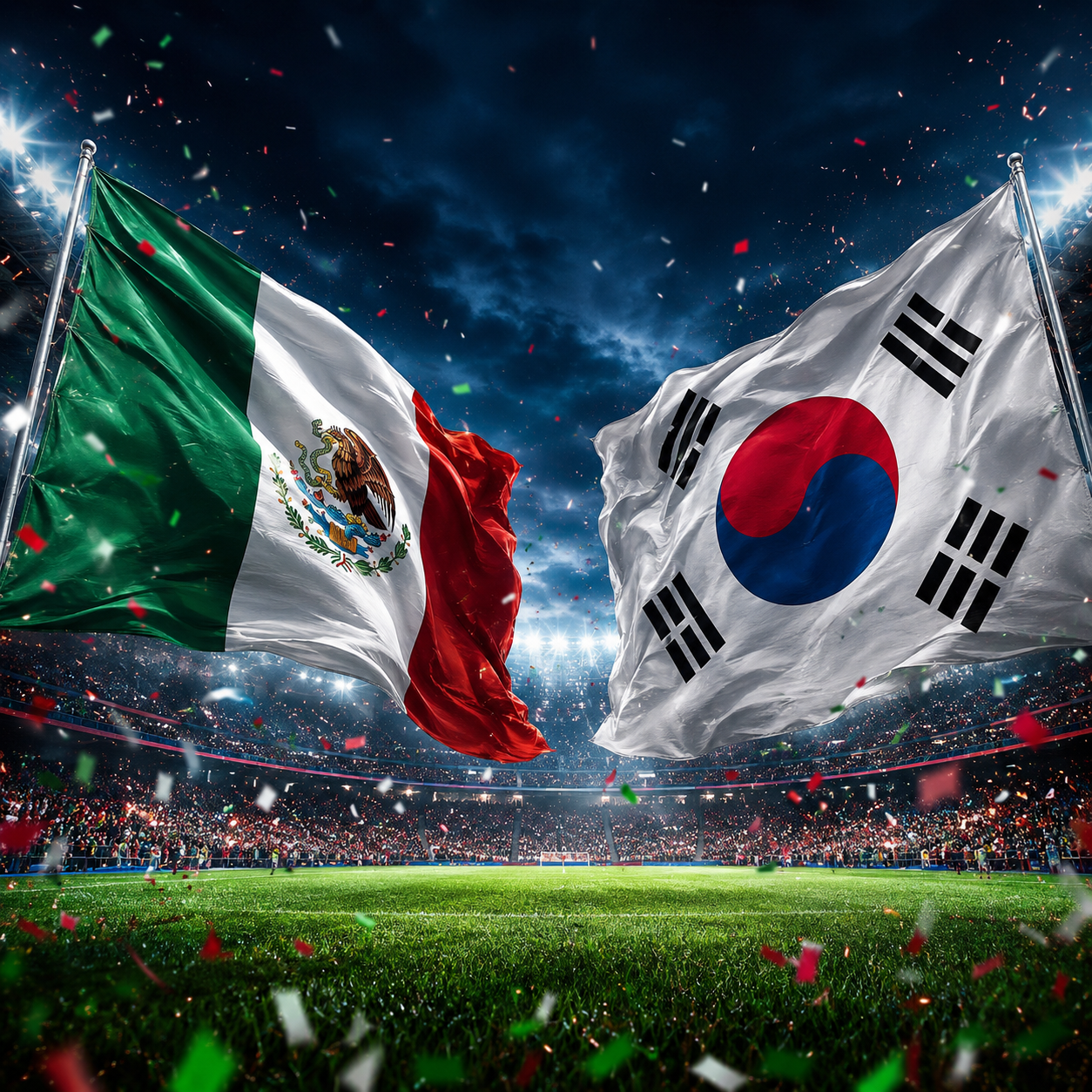
🏆 <strong>México 🇲🇽 x Coreia do Sul 🇰🇷</strong>
Understanding what makes this rivalry special requires exploring both nations’ football heritage and competitive spirit. ⚽
The Historical Context of Mexico vs South Korea Encounters
Mexico and South Korea have crossed paths multiple times in international football, creating a competitive history worth examining. Their World Cup meetings have consistently delivered drama, with both nations demonstrating their unique strengths and tactical approaches.
The most memorable clash came during the 2018 FIFA World Cup in Russia, where both teams found themselves in Group F alongside defending champions Germany and Sweden.
That tournament provided a perfect showcase of how preparation, discipline, and tactical awareness can overcome perceived differences in football philosophy.
South Korea’s shocking 2-0 victory over Germany in that tournament sent shockwaves through the football world, demonstrating the Taegeuk Warriors’ capacity to execute game plans flawlessly under pressure.
Meanwhile, Mexico’s opening victory against the same German side proved their ability to compete with football’s elite when motivation runs high.
Key Historical Matches That Defined the Rivalry
Beyond World Cup stages, these nations have met in various friendly matches and international tournaments. Each encounter has added layers to their competitive relationship, with Mexico generally holding a slight advantage in head-to-head statistics.
The 1998 World Cup saw both teams participate, though they didn’t face each other directly. However, their performances in subsequent tournaments have created an unofficial rivalry based on mutual respect and competitive intensity whenever they meet.
Mexican Football: Passion, Flair, and Unwavering Support 🇲🇽
Mexican football culture is inseparable from its passionate fanbase. El Tri supporters create an atmosphere unlike any other, transforming stadiums into seas of green, white, and red regardless of the host country.
The Mexican national team carries the expectations of an entire nation that lives and breathes football.
From the streets of Mexico City to the smallest villages, every match becomes a national event, with families gathering around televisions and public squares erupting in celebration or disappointment.
Tactically, Mexico has evolved considerably over the decades. While maintaining their traditional flair and attacking intent, modern Mexican teams blend technical skill with improved defensive organization.
Players like Javier Hernández, Rafa Márquez, and Guillermo Ochoa have become international stars, representing Mexico’s football excellence on the global stage.
The Mexican Playing Style and Tactical Approach
Mexican teams typically emphasize ball possession, quick transitions, and creative attacking play. Their players are technically gifted, comfortable on the ball, and capable of producing moments of individual brilliance that can change matches instantly.
The traditional Mexican formation favors attacking fullbacks who push high up the pitch, creating width and numerical advantages in offensive situations.
This approach requires disciplined midfielders who can cover defensive gaps while also contributing to the build-up play.
Mexican forwards are expected to be mobile, capable of dropping deep to receive the ball and linking play with midfielders. This fluid attacking structure can overwhelm opponents who struggle to track multiple runners and maintain defensive shape.
South Korean Football: Discipline, Unity, and Tactical Precision 🇰🇷
South Korea’s football philosophy centers on collective effort, tactical discipline, and relentless work rate. The Taegeuk Warriors have built their international reputation on teamwork and organizational excellence rather than individual star power.
Korean football culture emphasizes respect for coaches, adherence to tactical instructions, and sacrifice for the team’s success. This approach has produced consistently competitive national teams that punch above their weight in major tournaments.
The rise of Korean football coincided with the country’s economic development and increased investment in sports infrastructure.
The 2002 World Cup, co-hosted by South Korea and Japan, marked a turning point as the Korean team reached the semifinals in a remarkable run that captivated the nation.
Tactical Organization and Work Ethic
South Korean teams are renowned for their exceptional fitness levels and ability to maintain high-intensity pressing throughout matches. Their disciplined defensive structure makes them difficult to break down, while their counter-attacking capability poses constant threats.
Korean players typically exhibit remarkable versatility, capable of fulfilling multiple tactical roles within the same match. This flexibility allows coaches to adjust formations and strategies without making substitutions, creating tactical unpredictability that confuses opponents.
The mental strength of Korean players deserves special mention. Their ability to maintain focus, execute game plans under pressure, and fight until the final whistle makes them formidable opponents regardless of the scoreline.
Contrasting Football Philosophies on Display
When Mexico and South Korea meet, spectators witness a fascinating tactical chess match between contrasting approaches. Mexico’s creative, attack-minded football clashes with South Korea’s structured, disciplined game plan.
Mexican players rely on technical superiority and individual creativity to unlock defenses. They’re comfortable maintaining possession, probing for openings, and exploiting spaces through clever movement and passing combinations.
South Korean teams, conversely, excel at defensive compactness and exploiting transition moments. They’re patient in absorbing pressure, maintaining their defensive shape, and launching quick counter-attacks when opponents commit numbers forward.
Where These Styles Create Exciting Football ⚡
The stylistic contrast ensures entertaining matches with distinct phases. Mexico typically dominates possession and territorial advantage, creating the majority of scoring opportunities through sustained attacking play.
South Korea’s approach requires discipline and patience, waiting for the right moments to strike. Their counter-attacks are clinical and purposeful, often resulting in high-quality scoring chances despite lower overall possession percentages.
This dynamic creates compelling viewing for neutral fans, as the match ebbs and flows between Mexico’s attacking pressure and South Korea’s dangerous counter-punches. The tactical battle between coaches becomes as important as the individual player matchups.
Star Players Who Define These National Teams
Both nations have produced world-class talents who represent their football philosophies perfectly. Mexican stars often emerge from Liga MX before moving to European leagues, while Korean players increasingly develop in top European clubs from young ages.
For Mexico, goalkeepers have traditionally been a position of strength. Guillermo Ochoa’s spectacular performances in World Cups have made him a national hero, with his reflexes and shot-stopping ability rescuing Mexico in crucial moments.
South Korea’s Son Heung-min represents the perfect embodiment of Korean football’s evolution.
His world-class performances for Tottenham Hotspur have made him Asia’s most recognizable football star, combining technical excellence with the work ethic characteristic of Korean players. 🌟
Emerging Talents and Future Stars
Both nations continue producing talented young players who will define future encounters. Mexico’s youth development system, particularly through clubs like América, Guadalajara, and Cruz Azul, consistently generates technically gifted prospects.
South Korea’s emphasis on sending young talents to European academies has created a pipeline of internationally experienced players who return to the national team with advanced tactical knowledge and competitive experience.
The next generation of Mexico vs South Korea matches will likely feature even higher technical quality as both nations refine their player development pathways and tactical approaches.
The Fan Experience: Two Passionate Nations United by Football
Mexican supporters are famous for traveling in massive numbers to support El Tri anywhere in the world. Their chants, colors, and unwavering enthusiasm create home-like atmospheres even in distant stadiums.
South Korean fans, known as the Red Devils, bring their own unique energy to matches. Their coordinated chants, synchronized movements, and disciplined support mirror the organized approach of their national team.
When these fan groups meet in stadiums, the result is a spectacular display of football passion from opposite sides of the world. Despite language barriers and cultural differences, their shared love for the beautiful game creates mutual respect and memorable atmospheres.
Tactical Battles Between the Benches
Coaching matchups in Mexico vs South Korea encounters often prove decisive. Mexican coaches typically favor experienced tacticians who understand how to manage player egos and harness passionate energies into effective team performances.
South Korean coaches, whether domestic or foreign, must navigate the unique pressures of Korean football culture while implementing tactical systems that maximize their players’ collective strengths.
The preparation for these matches involves detailed analysis of opponents’ tendencies, individual player characteristics, and strategic planning for various in-game scenarios. Both coaching staffs approach these encounters with meticulous attention to detail.
In-Game Adjustments That Decide Outcomes
The ability to read the match and make tactical adjustments separates good coaches from great ones in these high-stakes encounters. Mexican coaches might adjust attacking patterns or introduce fresh legs to maintain offensive pressure.
Korean coaches excel at making strategic substitutions that reinforce defensive solidity or inject pace for counter-attacking situations. Their ability to communicate tactical instructions clearly and have them executed precisely gives them significant advantages.
What These Matches Mean for World Cup Ambitions
For both Mexico and South Korea, matches against quality opponents serve as crucial preparation for World Cup campaigns. These encounters provide opportunities to test tactical approaches, evaluate player readiness, and build team cohesion under competitive pressure.
Mexico’s World Cup ambitions have been consistently undermined by the “quinto partido” curse – their inability to advance beyond the Round of 16 since 1986.
Breaking this barrier requires performing against teams with different styles, making matches against South Korea valuable learning experiences.
South Korea aims to replicate their 2002 semifinal success and establish themselves as consistent World Cup contenders. Competing against technically superior opponents like Mexico helps them refine the tactical discipline and mental resilience necessary for tournament success. 🏆
Cultural Exchange Through Football
Beyond the tactical and competitive elements, Mexico vs South Korea matches facilitate cultural exchange between nations separated by vast geographical distances. Football serves as a universal language that transcends these barriers.
Mexican and Korean cultures share certain values – strong family bonds, respect for tradition, and national pride – that manifest differently in their football cultures but create underlying connections between the fan bases.
Players from both nations have competed in each other’s domestic leagues, creating personal connections and mutual understanding that enrich the sporting rivalry with genuine respect and appreciation.
Future Outlook: Evolving Rivalry in Modern Football
As global football continues evolving, both Mexico and South Korea adapt their approaches while maintaining core philosophical principles. Mexican football is investing heavily in youth development and tactical education to complement their traditional technical strengths.
South Korea’s continued success in producing players for top European leagues ensures their national team remains competitive at the highest levels. Their tactical sophistication continues improving as more players gain experience in elite competitions.
Future encounters between these nations will likely feature even higher quality, as both countries refine their football development systems and tactical approaches based on global trends and lessons from previous tournaments.
Why Neutrals Should Watch Mexico vs South Korea 👀
For football fans without allegiance to either nation, Mexico vs South Korea matches offer compelling viewing for numerous reasons. The stylistic contrast guarantees tactical variety and unpredictable outcomes.
The passionate atmospheres created by both fan bases make these encounters special experiences, whether watched in stadiums or on television. The energy, colors, and sounds transport viewers into the heart of international football’s unique culture.
These matches consistently deliver competitive balance – neither team dominates historically, meaning every encounter offers genuine uncertainty about the outcome. This competitive parity ensures maximum engagement from opening whistle to final minute.
Lessons From Past Encounters Shaping Future Tactics
Coaches and analysts from both nations study previous matches meticulously, identifying patterns, weaknesses, and successful strategies to inform future game plans. This analytical approach means each new encounter features evolved tactics based on historical lessons.
Mexico has learned that underestimating South Korea’s counter-attacking threat leads to dangerous situations. Maintaining defensive discipline while attacking has become crucial to controlling these matches.
South Korea recognizes that purely defensive approaches allow Mexico to dominate possession and create overwhelming attacking pressure. Finding the right balance between defensive solidity and offensive threat remains their tactical challenge.
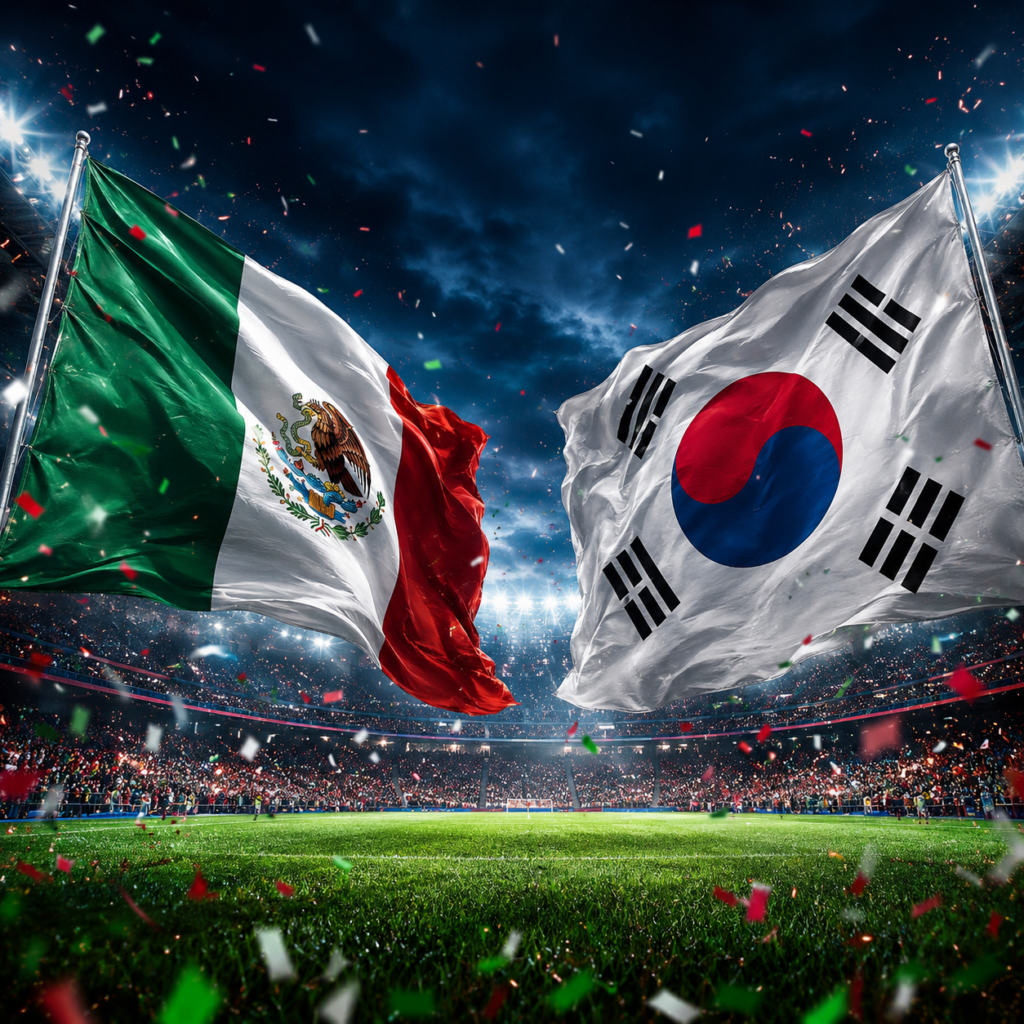
The Beautiful Contrast That Makes Football Special
Ultimately, Mexico vs South Korea represents what makes international football so captivating – the meeting of different cultures, philosophies, and approaches united by shared passion for the beautiful game.
These encounters remind us that there’s no single correct way to play football. Success can come through Mexican flair and creativity or Korean discipline and organization. Both approaches have merit, and their collision creates football at its most interesting.
As fans, we’re privileged to witness these cultural and tactical exchanges that transcend sport, offering glimpses into how different societies approach competition, teamwork, and the pursuit of excellence.
Whether you support Mexico’s passionate attack or South Korea’s disciplined defense, these matches provide entertainment, education, and inspiration for football lovers worldwide. 🌍⚽
