
Anúncios
# HTML Article:
Finding fish used to be an art passed down through generations—now, technology puts that power right in your pocket, transforming how we approach every fishing trip.
I still remember my first fishing trip with a GPS unit. The old-timer next to me shook his head, muttering something about “real fishermen” not needing gadgets. Three hours later, while he sat fishless, I’d landed five bass from spots I’d marked the previous weekend. He asked to see my screen before I packed up.
That moment crystallized something important: fishing GPS technology isn’t about replacing skill—it’s about amplifying it. The best anglers I know today combine decades of experience with cutting-edge technology, and they consistently outfish everyone else on the water. Let’s explore how GPS systems have revolutionized sport fishing and how you can leverage them to transform your success rate.
🎯 Why GPS Technology Changed Everything for Anglers
The fishing world experienced a seismic shift when GPS technology became accessible to everyday anglers. Before this revolution, finding productive spots required years of trial and error, relying on landmarks that looked different depending on angles and lighting conditions.
Modern fishing GPS units do far more than show your location. They create a digital memory of every successful pattern you discover, building a personal fishing intelligence database that grows more valuable with each outing. That hidden hump where you caught those walleyes last spring? Marked forever with pinpoint accuracy.
Water levels change. Landmarks disappear. But GPS coordinates remain constant, allowing you to return to productive structure regardless of conditions. This consistency transforms occasional lucky catches into repeatable patterns you can exploit season after season.


📍 Understanding How Fishing GPS Actually Works
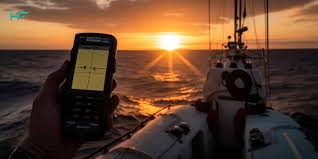
At its core, a fishing GPS receives signals from satellites orbiting Earth, triangulating your exact position within meters—sometimes even centimeters with advanced systems. But the magic happens in how fishing-specific units interpret and display this information.
Unlike automotive GPS that focuses on roads and addresses, fishing GPS integrates bathymetric data, showing underwater topography that reveals where fish are likely to hold. Depth contours, drop-offs, channels, and humps appear on your screen, painting a picture of the underwater landscape invisible from the surface.
Modern units combine GPS positioning with sonar technology, creating a comprehensive view that shows both where you are and what lies beneath your boat. This integration allows you to mark waypoints not just at surface locations but at specific depths and structures where you’ve found fish.
🗺️ Essential Features Every Fishing GPS Should Have
Not all GPS units serve anglers equally well. Understanding which features matter most helps you choose equipment that genuinely improves your fishing rather than just cluttering your boat with expensive gadgets.
Waypoint Management and Organization
The ability to save and categorize waypoints separates basic GPS units from fishing-focused systems. Look for devices that let you create unlimited waypoints with custom icons and detailed notes. Being able to tag spots as “summer bass,” “walleye deep,” or “winter crappie” transforms raw data into actionable intelligence.
Advanced systems allow waypoint folders and groups, so you can organize hundreds of spots without confusion. Some anglers I know have over 500 waypoints across different lakes, all meticulously categorized for instant reference.
Track Recording and Route Planning
Track recording captures your entire path across the water, showing exactly where you’ve been. This feature proves invaluable when you catch fish but weren’t watching your exact location—the track reveals precisely where the action happened.
Route planning lets you create efficient paths between productive spots, minimizing travel time and maximizing fishing time. Tournament anglers rely heavily on this feature, plotting optimal sequences through their best locations.
Mapping and Chart Compatibility
Quality fishing GPS units support detailed maps showing depth contours, vegetation, bottom composition, and even historical fish-holding structures. High-definition maps reveal subtle variations in bottom topography that attract and hold fish.
Look for systems compatible with user-generated content and community mapping. Thousands of anglers worldwide share information through various platforms, and accessing this collective knowledge can dramatically shorten your learning curve on new waters.
🚤 Choosing Between Dedicated Units and Smartphone Apps
This question sparks passionate debates in fishing communities. Both approaches offer distinct advantages depending on your fishing style, budget, and technical comfort level.
The Case for Dedicated GPS Units
Purpose-built fishing GPS units offer rugged construction designed for harsh marine environments. They function in direct sunlight without screen glare issues, resist water damage, and typically feature longer battery life than smartphones.
Dedicated units integrate seamlessly with other marine electronics—sonar, radar, and autopilot systems—creating a unified information ecosystem on your boat. Large screens display multiple data types simultaneously, and physical buttons work with wet or gloved hands.
The investment runs higher, but serious anglers who fish frequently find dedicated units indispensable. They represent tools built specifically for our challenges rather than general-purpose devices adapted for fishing.
The Smartphone GPS Revolution
Smartphone fishing apps have democratized GPS technology, putting powerful features in devices most people already own. Modern apps rival dedicated units in functionality, offering waypoint management, depth maps, weather integration, and social sharing features.
Apps update constantly, adding features and improving performance without hardware upgrades. Cloud synchronization means your waypoints and data remain accessible across multiple devices, and you never lose information if a phone fails.
The key drawbacks involve durability, screen visibility in bright conditions, and battery consumption. Successful smartphone GPS users invest in quality waterproof cases, external battery packs, and sometimes portable charging solutions for extended trips.

🎣 Advanced GPS Techniques That Separate Pros from Amateurs
Anyone can mark a waypoint where they catch a fish. Elite anglers extract far more value from GPS technology through strategic techniques developed over thousands of hours on the water.
Pattern Recognition Through Data Analysis
Instead of simply marking where you catch fish, mark productive spots with detailed notes about conditions: water temperature, time of day, weather patterns, moon phase, and specific lures or presentations that worked.
Over time, this data reveals patterns invisible during individual trips. You might discover that a particular point produces best during falling water levels in late afternoon, or that a specific depth range consistently holds fish during cold fronts.
Some advanced anglers maintain fishing journals synchronized with GPS data, creating comprehensive records that reveal seasonal movements, optimal conditions for different species, and productive patterns worth repeating.
Strategic Waypoint Offsetting
Here’s a technique many successful anglers use but few discuss openly: instead of marking productive spots exactly, they offset waypoints by 20-50 feet in random directions. This protects their hard-won knowledge if someone views their screen or if data gets shared accidentally.
The offset remains close enough that you easily relocate the exact spot visually, but far enough that casual observers can’t exploit your discoveries. Tournament anglers consider this essential operational security.
Grid Searching Unfamiliar Waters
When fishing new waters, systematic grid patterns help you efficiently explore and identify productive areas. Plot parallel routes covering sections of water, then follow them methodically while monitoring your sonar.
Mark anything interesting: depth changes, structure, vegetation edges, hard-to-soft bottom transitions. After completing your grid search, review all waypoints and prioritize spots exhibiting characteristics that typically hold fish in similar waters.
This scientific approach dramatically reduces the time required to develop confidence on unfamiliar lakes or rivers. What might take seasons to learn through random exploration happens in focused sessions with strategic GPS use.
🌊 Integrating GPS with Sonar for Complete Coverage
The real power emerges when GPS positioning combines with quality sonar technology. This integration creates a comprehensive underwater mapping system that reveals not just where structure exists, but precisely where fish relate to that structure.
Modern side-scan and down-scan sonar technologies let you see astonishing detail: individual fish, baitfish schools, submerged timber, rock piles, and weed edges. When you spot fish on sonar, instantly marking that waypoint with your GPS creates a permanent record of their location and the conditions that put them there.
Forward-facing sonar represents the latest evolution, showing fish in real-time ahead of your boat. Combined with precise GPS positioning, this technology allows you to mark active fish, circle back to exact locations, and present lures with surgical precision.
📱 Cloud-Based GPS Systems and Data Sharing
The fishing community has always shared information, but modern GPS technology with cloud connectivity takes this tradition to new levels. Platforms now exist where anglers worldwide contribute waypoints, catching reports, and condition updates.
Community-sourced data helps you quickly identify productive areas on lakes you’ve never fished. While this democratization concerns some anglers who prefer keeping spots secret, it generally raises everyone’s success rate and makes the sport more accessible to newcomers.
Smart anglers balance between using community information and protecting their personal discoveries. They might share general areas while keeping specific waypoints private, contributing to the community while maintaining competitive advantages.
⚡ Power Management and Technical Considerations
Even the most feature-rich GPS becomes useless when its battery dies mid-trip. Successful implementation requires thinking through power requirements and backup systems.
Dedicated marine units typically draw power from boat electrical systems, but understanding their consumption helps prevent issues. Smartphone apps drain batteries quickly, especially with screens constantly active and GPS continuously tracking position.
Serious smartphone GPS users carry external battery packs—often multiple units on extended trips. Some install permanent charging solutions on their boats, with dedicated USB ports positioned for easy device access. Solar chargers work well for anglers who fish remote locations away from shore power.
Always maintain backup navigation methods. Paper maps, compass knowledge, and memorized landmarks ensure you can safely return to launch even if electronics fail. Technology enhances fishing, but prudent anglers never become completely dependent on it.
🏆 Tournament Applications and Competitive Advantages
In competitive fishing, GPS technology isn’t optional—it’s fundamental. Tournament anglers who master GPS techniques consistently outperform those who don’t, and the performance gap continues widening as technology advances.
Pre-fishing becomes far more productive when you methodically mark every piece of promising structure, then optimize routes between locations during competition. Time management often determines tournament outcomes, and GPS-planned routes maximize water coverage.
Some tournament circuits now restrict certain GPS features or community data sharing to maintain competitive fairness. Understanding specific rules for competitions you enter prevents costly disqualifications.
🌟 GPS for Shore and Kayak Anglers
Boat anglers aren’t the only ones benefiting from GPS technology. Shore fishermen and kayak anglers gain tremendous advantages from handheld units or smartphone apps.
Marking productive shore spots allows you to return to exact locations that produced fish previously. This matters especially on long stretches of similar-looking shoreline where visual landmarks prove unreliable.
Kayak anglers use GPS for safety as much as fish-finding. Tracking routes helps you monitor distance from launch points, estimate return times, and avoid getting disoriented in fog or during twilight fishing sessions. Emergency contacts can locate you quickly if problems arise when you share GPS coordinates.
🔮 Future Developments in Fishing GPS Technology
Artificial intelligence integration represents the next frontier in fishing GPS. Future systems will analyze your historical catch data, compare it against weather patterns, lunar cycles, and water conditions, then recommend optimal spots for current conditions.
Augmented reality displays may soon overlay GPS waypoints and depth information onto your actual view through smartphone cameras or specialized glasses. Imagine looking at a section of water and seeing depth contours, your waypoints, and even fish locations displayed in your field of vision.
Satellite technology continues improving, offering better accuracy and faster positioning updates. Combined with enhanced mapping detail and real-time community data, the fishing GPS of tomorrow will make today’s units seem primitive.
💡 Getting Started: Your First Steps with Fishing GPS
For anglers new to GPS technology, the learning curve needn’t feel overwhelming. Start simple and expand your skills progressively as comfort grows.
Begin by marking obvious landmarks: your launch ramp, dock, and marina. Practice navigating back to these known locations until using the GPS feels natural. Then start marking spots where you catch fish, adding brief notes about what worked.
Study your lake’s depth map during evenings at home. Identify potentially productive structures—points, humps, channels, ledges—and create waypoints to investigate during upcoming trips. This prepares you to fish strategically rather than randomly.
Don’t feel pressured to use every feature immediately. Master basic waypoint marking and navigation first, then gradually explore advanced functions like track recording, route planning, and data analysis as your confidence builds.
🎓 The Learning Never Stops
GPS technology transforms how we approach fishing, but it remains a tool—one that amplifies skills rather than replacing them. The most successful anglers combine deep fishing knowledge with strategic technology use, creating synergy that produces consistent results.
Every trip on the water represents an opportunity to refine your GPS techniques, discover new patterns, and build a personal database of fishing intelligence that grows more valuable over time. The waypoints you mark this season become reference points next year, and patterns you identify compound across seasons.
Whether you fish for relaxation or competition, on weekends or daily, from kayaks or bass boats, GPS technology offers advantages that enhance every aspect of the experience. The learning investment pays dividends through better catches, safer navigation, and deeper understanding of the waters you love.
Start wherever you are with whatever device you have. Mark your first waypoint on your next trip, and begin building the foundation for a lifetime of improved fishing success. The fish are waiting in spots you’ll discover and return to again and again, guided by coordinates stored in your GPS and knowledge earned through experience.
