
Anúncios
Understanding traffic rules isn’t just about passing a test—it’s about protecting lives, including your own. One mistake on the road can spiral into a tragedy, making knowledge of traffic laws, signs, and regulations absolutely essential.
Every day, thousands of drivers navigate complex roadways without fully understanding the signs, markings, and regulations that keep traffic flowing safely. This gap in knowledge contributes to accidents, fines, and unnecessary stress behind the wheel.
Whether you’re a new driver preparing for your license exam or an experienced motorist looking to refresh your knowledge, this comprehensive guide will clarify traffic manual essentials, decode confusing signs, explain right-of-way rules, and eliminate common doubts. Let’s dive into everything you need to master the road with confidence. 🚗
Why Traffic Manuals Matter More Than You Think
Traffic manuals aren’t just bureaucratic documents—they’re survival guides for the modern road. These official publications contain standardized rules that apply across regions, ensuring every driver speaks the same visual language when interpreting signs and road markings.
Ignoring these guidelines doesn’t just risk fines; it creates dangerous situations. When drivers improvise instead of following established protocols, predictability disappears. Other road users can’t anticipate your actions, leading to collisions that could have been easily avoided.
Modern traffic manuals are regularly updated to reflect new research on road safety, emerging vehicle technologies, and evolving traffic patterns. Staying current with these changes isn’t optional—it’s a responsibility that comes with your driving privileges.
Decoding Traffic Signs: Your Visual Road Dictionary 🚦
Traffic signs communicate critical information instantly, transcending language barriers through universal symbols and colors. Understanding their categories helps you process information quickly while driving.


Regulatory Signs: The Non-Negotiables
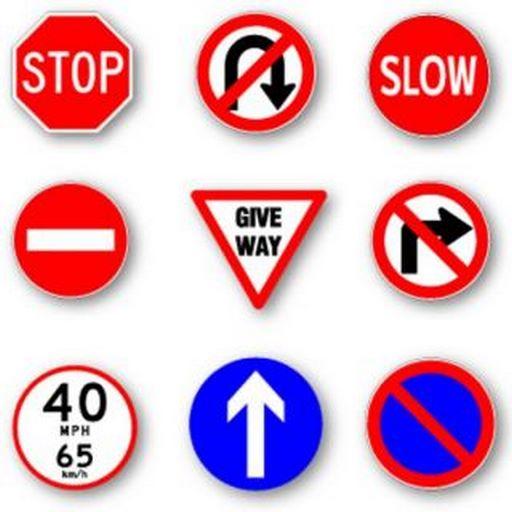
Regulatory signs display rules you must follow by law. These typically feature red, white, and black colors, with circular or rectangular shapes. Disobeying them results in fines, points on your license, or worse—accidents.
Common examples include stop signs, yield signs, speed limit indicators, and no-entry warnings. The octagonal stop sign is perhaps the most recognized regulatory sign globally, requiring complete vehicle cessation before proceeding.
Speed limit signs deserve special attention. Many drivers treat these as suggestions rather than legal requirements. Remember that posted limits reflect safe speeds under ideal conditions—adjust lower during rain, fog, or heavy traffic.
Warning Signs: Your Advanced Alert System
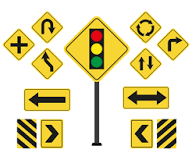
Warning signs prepare you for upcoming hazards or changes in road conditions. Usually diamond-shaped with yellow backgrounds and black symbols, these signs give you precious seconds to adjust speed and position.
Curve warnings, intersection alerts, pedestrian crossings, and animal crossing zones all fall under this category. Ignoring warning signs strips away your reaction time buffer, turning manageable situations into emergencies.
School zone warnings carry particular importance. These areas have reduced speed limits and heightened pedestrian activity. Fines in school zones are often doubled, reflecting the vulnerability of young road users.
Informational Signs: Your Navigation Companions
These signs provide helpful information without imposing legal obligations. They include distance markers, service locations, tourist information, and route guidance. Typically featuring blue or green backgrounds, they help you navigate efficiently.
Exit numbers, rest area indicators, and hospital directional signs enhance your journey planning. While not legally binding, ignoring them can lead to missed exits, unnecessary fuel consumption, and travel delays.
Right-of-Way Rules: Preventing Intersection Chaos
Right-of-way regulations prevent the confusion that would otherwise paralyze every intersection. These rules establish a clear hierarchy determining which vehicle proceeds first in various scenarios.
At four-way stops, the first vehicle to complete its stop gains right-of-way. When two vehicles arrive simultaneously, the driver on the right proceeds first. This simple rule eliminates guesswork and prevents gridlock.
Roundabouts follow different logic: vehicles already circulating have priority over those entering. Many drivers struggle with this concept, causing hesitation and traffic flow disruption. Confidence comes from understanding and trusting the system.
Emergency vehicles with active sirens and lights always have absolute right-of-way. Pull to the right side of the road and stop completely until they pass. Blocking emergency vehicles isn’t just illegal—it can cost lives.
Pedestrians hold right-of-way at marked crosswalks and intersections, regardless of whether traffic lights are present. Yielding to pedestrians isn’t courtesy—it’s law. Failure to stop can result in serious penalties and tragic consequences.
Lane Discipline and Road Markings Explained
Road markings create invisible but powerful boundaries that organize traffic flow. Understanding these painted guides is crucial for safe driving and legal compliance.
Solid Lines vs. Dashed Lines
A solid white line separating lanes indicates that crossing is discouraged but not illegal in most jurisdictions. However, solid yellow lines carry stricter meaning—crossing is prohibited except in emergencies.
Dashed lines signal permission to change lanes when safe to do so. The length and spacing of dashes convey additional information: longer dashes with wider gaps indicate areas where passing is particularly appropriate.
Double solid lines represent absolute barriers. Crossing these markings violates traffic law and typically occurs in areas with limited visibility or high accident risk. The consequences include substantial fines and license points.
Special Lane Markings and Their Purposes
HOV (High Occupancy Vehicle) lanes use special markings, often diamond symbols, to indicate restricted access. These lanes reduce congestion by encouraging carpooling, but misuse results in expensive citations.
Bicycle lanes, marked by bike symbols and often painted green or separated by solid lines, are exclusive spaces for cyclists. Drivers may only cross these briefly when making legal turns, never for travel or parking.
Bus lanes maintain public transportation efficiency. Driving in bus lanes during restricted hours brings heavy fines and contributes to transportation system delays affecting thousands of commuters.
Speed Limits: Science, Safety, and Enforcement 🚓
Speed limits aren’t arbitrary numbers selected by officials with quotas. They’re carefully calculated based on road design, traffic volume, accident history, and sight distance considerations.
Residential areas typically enforce 25-35 mph limits because of frequent pedestrian activity, hidden driveways, and playing children. Higher speeds dramatically reduce reaction time and exponentially increase crash severity.
Highway speed limits balance efficiency with safety. While modern vehicles can safely travel faster, limits account for the variety of vehicle types sharing the road, from fully-loaded semi-trucks to compact cars with varying braking capabilities.
Variable speed limits adjust in response to weather conditions, traffic congestion, or construction activity. These digital displays represent current safe speeds—ignoring them because “it’s usually faster here” negates their entire purpose.
Remember that speed limits indicate maximum safe speeds under ideal conditions. Rain, fog, darkness, and heavy traffic demand reduced speeds regardless of posted limits. “Basic speed law” principles hold you responsible for driving at reasonable speeds given current conditions.
Turning Regulations and Intersection Navigation
Intersections concentrate risk because multiple traffic streams converge. Mastering turning protocols minimizes this danger and keeps traffic flowing smoothly.
Right turns require positioning in the rightmost lane, signaling at least 100 feet before the turn, yielding to pedestrians, and completing the turn into the nearest right lane. Cutting corners or swinging wide violates these principles and endangers others.
Left turns demand greater caution. Position in the leftmost lane, signal appropriately, yield to oncoming traffic, and turn only when safe. Many drivers underestimate oncoming vehicle speed, causing devastating T-bone collisions.
Protected left turn signals (green arrows) grant exclusive right-of-way. Permissive signals (solid green lights) allow left turns only after yielding to oncoming traffic. Confusion between these two situations causes frequent accidents.
U-turns are prohibited at many locations even without posted signs. Generally, you cannot perform U-turns at railroad crossings, on hills with limited visibility, in business districts, or where signs explicitly forbid them.
Parking Regulations: More Than Finding a Spot
Parking violations seem minor compared to moving violations, but improper parking creates hazards, blocks emergency access, and impedes traffic flow.
Red curbs mean no stopping, standing, or parking at any time. Yellow curbs indicate loading zones with time restrictions. White curbs typically allow brief passenger loading/unloading. Blue curbs reserve space for disabled placard holders.
Distance requirements matter: don’t park within 15 feet of a fire hydrant, 20 feet of a crosswalk, or 30 feet of a stop sign or traffic signal. These buffers maintain visibility and emergency access.
Parking on hills requires curbing your wheels. When facing uphill with a curb, turn wheels away from the curb. Facing downhill, turn wheels toward the curb. Without a curb, always turn wheels toward the road’s edge. This prevents runaway vehicles if parking brakes fail.
Traffic Signals: Beyond Red, Yellow, and Green
Traffic lights seem straightforward, but nuances exist that many drivers misunderstand. A green light means proceed when safe—not “floor it without looking.”
Yellow lights indicate the signal is about to turn red. Legally, you should stop if you can safely do so before entering the intersection. Running yellows to avoid stopping is both dangerous and, in many jurisdictions, illegal.
Red lights mean stop completely behind the stop line or crosswalk. Right turns on red are permitted after stopping in most areas unless signs prohibit them, but you must yield to all pedestrians and vehicles.
Flashing yellow lights warn of caution—proceed carefully after checking for hazards. Flashing red lights function as stop signs—come to a complete stop before proceeding when clear.
Malfunctioning traffic lights create dangerous confusion. When signals are dark or displaying conflicting information, treat the intersection as a four-way stop. Every vehicle must stop before proceeding cautiously.
Sharing Roads with Vulnerable Users 🚴
Bicyclists, motorcyclists, and pedestrians face exponentially greater injury risk than vehicle occupants. Special awareness and courtesy protect these vulnerable road users.
When passing cyclists, most jurisdictions require at least three feet of clearance. Rushing past too closely terrifies cyclists and can cause them to lose balance. Remember that cyclists have equal road rights in most areas.
Check mirrors and blind spots carefully before opening car doors. “Dooring” cyclists causes serious injuries and deaths. This hazard is entirely preventable with the simple habit of looking before opening.
Motorcycles occupy full lane width even though they’re smaller than cars. Never share a lane with a motorcycle or squeeze past in the same lane. Their narrow profile makes them difficult to see—check twice before changing lanes.
Pedestrians deserve extra patience. They may be elderly, distracted, or have mobility limitations. Even when pedestrians cross illegally, your responsibility is to avoid striking them. Being “right” doesn’t justify causing injury.
School Zones and Special Speed Areas
School zones implement strict regulations during specified hours when children arrive and depart. These reduced speed limits, typically 15-25 mph, dramatically improve child safety statistics.
Flashing yellow lights indicate active school zone hours. Even without flashing lights, posted times must be observed. School days vary by district, so don’t assume zones are inactive during your local school’s holidays.
Stop for school buses with extended stop arms and flashing red lights. This applies to both directions on undivided roads. Only on divided highways can opposite-direction traffic proceed. Violations carry severe penalties—financially and morally.
Construction zones similarly demand reduced speeds and heightened attention. Workers operate in close proximity to high-speed traffic, depending entirely on driver compliance for safety. Fines in work zones are often doubled or tripled.
Common Traffic Violations and Their Consequences ⚠️
Understanding violations helps drivers avoid costly mistakes. Beyond immediate fines, traffic violations increase insurance premiums and accumulate points that can suspend your license.
Reckless driving encompasses numerous behaviors: excessive speeding, aggressive lane changes, tailgating, and street racing. This serious charge can result in license suspension, significant fines, or even jail time depending on severity.
DUI (Driving Under the Influence) represents the most consequential traffic violation. Beyond legal penalties—license loss, fines, imprisonment—you’ll carry a criminal record affecting employment, housing, and personal relationships.
Distracted driving violations increasingly target mobile phone use. Texting while driving is illegal in most jurisdictions, with hands-free requirements for phone conversations. That glance at your phone can end a life—yours or someone else’s.
Failing to maintain insurance violates law and leaves you financially vulnerable. Accidents happen to careful drivers too. Operating uninsured puts your assets, income, and future at catastrophic risk.
Weather Conditions and Adjusted Driving Requirements
Traffic laws establish baseline rules, but responsible drivers adjust for conditions. Weather transforms familiar roads into hazardous environments requiring modified techniques.
Rain reduces tire traction and visibility. Increase following distance to at least four seconds, reduce speed by 5-10 mph below posted limits, and turn on headlights for visibility. Hydroplaning occurs when water builds between tires and pavement—ease off the accelerator if it happens, never brake suddenly.
Fog demands extreme caution. Use low-beam headlights (high beams reflect off fog, reducing visibility). Slow significantly and increase following distance. If visibility becomes near-zero, exit the highway at the next off-ramp safely rather than continuing.
Snow and ice create treacherous conditions. Accelerate and decelerate gently, turn slowly, and increase following distance to eight seconds or more. Black ice—transparent ice coating—appears as wet pavement but offers virtually no traction.
Strong winds affect high-profile vehicles like trucks, RVs, and vehicles towing trailers. Sudden gusts can push vehicles into adjacent lanes. Reduce speed and maintain firm, steady steering when wind advisories are active.
Defensive Driving: Preventing Accidents Before They Happen
Defensive driving transcends rule-following—it’s about anticipating danger and maintaining escape routes. This proactive mindset prevents countless accidents.
The two-second rule establishes minimum following distance: when the vehicle ahead passes a fixed object, you should reach that object no sooner than two seconds later. Increase this to three or four seconds in poor conditions.
Scan constantly—not just the vehicle directly ahead, but 10-15 seconds down the road. This extended vision provides early warning of brake lights, merging vehicles, or obstacles, giving you time to respond smoothly rather than react desperately.
Always maintain an “out”—a space you can steer into if the vehicle ahead stops suddenly. Avoid driving in clusters where vehicles surround you. Adjust speed slightly to open space around your vehicle, creating maneuvering options.
Assume other drivers will make mistakes. That vehicle might run the red light, that truck might not see you in its blind spot, that pedestrian might step into traffic. Defensive drivers prepare for others’ errors without relying on their compliance.
Understanding Your Vehicle’s Legal Requirements
Traffic regulations extend beyond driving behavior to vehicle condition and equipment. Neglecting these requirements brings citations and safety risks.
All lights—headlights, brake lights, turn signals—must function properly. A burned-out brake light eliminates the warning you’re stopping, inviting rear-end collisions. Replace failed bulbs immediately, not “when you get around to it.”
Tire requirements include minimum tread depth (typically 2/32 inch, though 4/32 is safer) and proper inflation. Worn tires drastically reduce traction, especially in wet conditions. Check tread monthly using the penny test.
Windshield cracks can obstruct vision and violate inspection requirements. Even small chips spread over time due to temperature changes and road vibrations. Repair minor damage before it becomes a replacement expense.
Vehicle registration and insurance documentation must be current and accessible. Traffic stops become complicated when you can’t produce these documents. Keep physical or digital copies readily available.
Mastering the Road With Confidence and Responsibility 🛣️
Traffic knowledge isn’t about memorizing rules for a test—it’s about internalizing principles that protect lives every time you drive. The regulations, signs, and procedures outlined here form a system developed through decades of research and, sadly, countless tragedies.
Every traffic rule exists because someone, somewhere, paid a terrible price in its absence. Speed limits reflect crash analysis. Sign placements mark accident sites. Right-of-way protocols prevent intersection collisions that once were common.
Competent driving requires continuous learning. Traffic laws evolve, roads change, and your skills need regular refreshing. Commit to periodic review of your local traffic manual, especially after moving to new areas with different regulations.
Beyond legal compliance, embrace the ethical dimension of driving. You operate a machine capable of tremendous destruction. With that power comes responsibility—to other drivers, pedestrians, cyclists, and your own passengers.
The next time you’re behind the wheel, remember that uncertainty and guesswork have no place in traffic. When doubt arises, choose the safer option. Reference official resources, ask questions, and never let pride prevent you from admitting knowledge gaps.
Driving isn’t just about getting from point A to point B—it’s about arriving safely, respecting shared spaces, and ensuring everyone else arrives safely too. Master the rules, respect the signs, understand the principles, and drive with the awareness that every decision matters. Your life and the lives of countless others depend on the knowledge you’ve gained here. Make it count every single time you turn the ignition. 🚗✨
