
Anúncios
Ever wondered if training your dog at home could be simpler than you think? You’re about to discover surprisingly easy methods that work wonders.


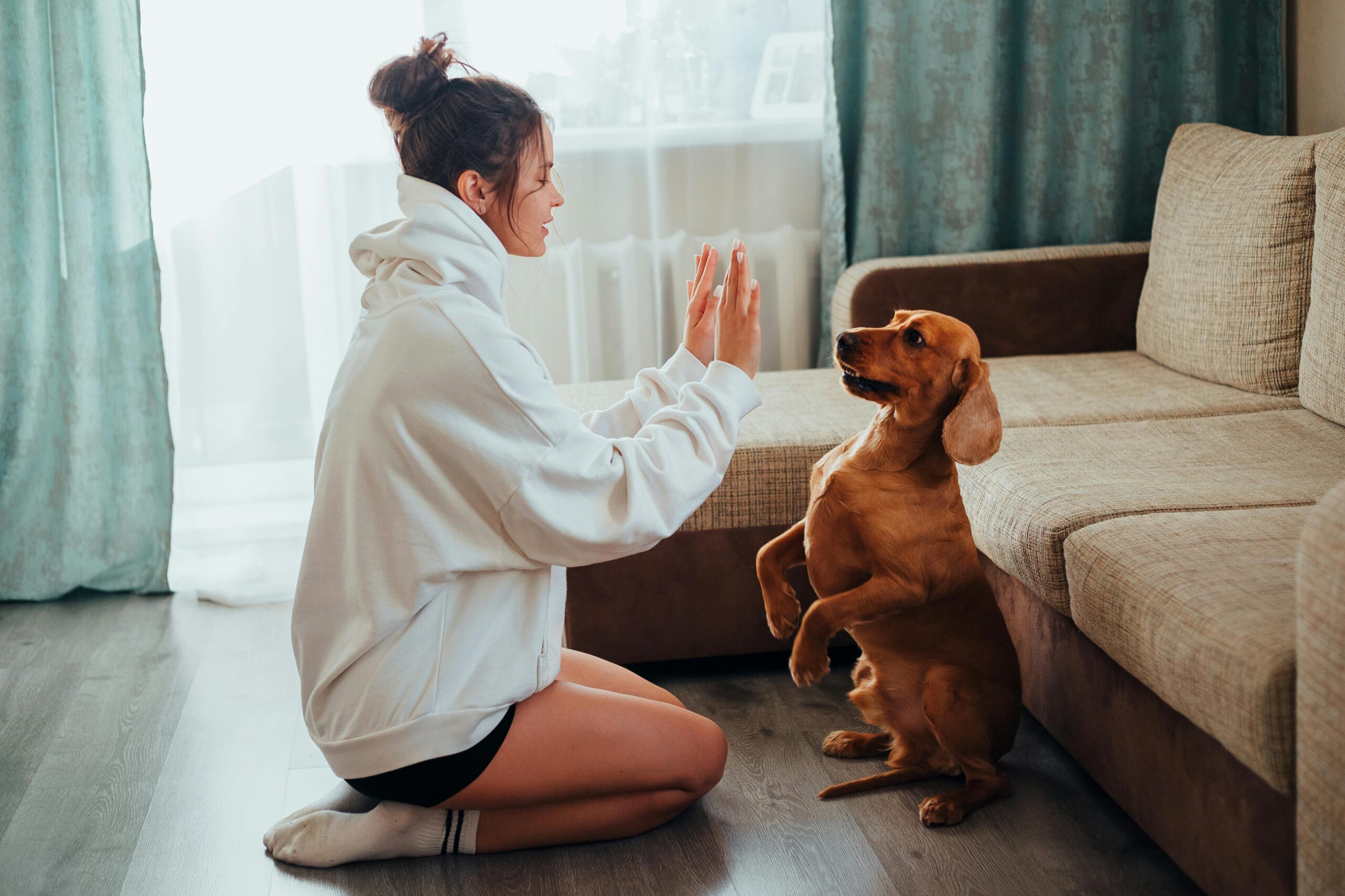
Training your dog doesn’t require expensive classes or complex equipment. The truth is, your living room can become the perfect training ground with just a few everyday items and the right approach. Many pet owners hesitate to start training because they believe it demands professional expertise or countless hours of practice.
But here’s the exciting part: dogs are natural learners who thrive on consistency and positive reinforcement. With simple techniques that fit seamlessly into your daily routine, you can transform your furry friend’s behavior while strengthening your bond. Let’s explore the surprisingly straightforward methods that professional trainers use—adapted for busy homes just like yours.
🎯 Why Home Training Actually Works Better Than You Think

Home environments offer unique advantages that professional training facilities simply cannot replicate. Your dog feels comfortable and relaxed in familiar surroundings, which significantly accelerates learning. Distractions are manageable, and you control the pace entirely.
Research shows that dogs trained in their home environment transfer learned behaviors more effectively to everyday situations. When your pup learns “sit” in your kitchen, they’ll naturally apply it during meal times, guest arrivals, and daily routines. This contextual learning creates lasting habits rather than temporary classroom behavior.
Another compelling reason? You become the primary teacher. This positions you as the pack leader and decision-maker, which dogs instinctively respect. Professional trainers might teach commands, but they cannot replicate the daily relationship-building that happens when you guide your dog through consistent home training sessions.
🏠 Setting Up Your Home Training Space Without Breaking the Bank
Forget fancy equipment. Effective dog training requires surprisingly little investment. Your most valuable tools are already available: your voice, body language, and everyday household items.
Designate a specific area in your home where distractions are minimal—perhaps a quiet corner of your living room or a section of your hallway. This consistency helps your dog recognize “training mode” and improves focus dramatically.
Here’s what you genuinely need to get started:
- A handful of small, soft treats that your dog loves (cut into pea-sized pieces)
- A standard leash for controlled movement exercises
- A comfortable mat or towel to mark the training spot
- Your smartphone to track progress and access training resources
- Five to ten minutes of dedicated, interruption-free time
Notice what’s missing? Expensive clickers, professional gear, or specialized equipment. While these tools can be helpful, they’re absolutely not necessary for effective home training. Your consistency and positive energy matter infinitely more than any gadget.
✨ The Magic of Five-Minute Training Sessions
Here’s a secret that surprises most new trainers: shorter sessions produce better results. Dogs have limited attention spans, typically ranging from five to fifteen minutes depending on age and temperament. Puppies especially benefit from brief, frequent training moments scattered throughout the day.
Think of training like watering a plant—frequent small amounts work better than occasional flooding. Three five-minute sessions daily will outperform one exhausting thirty-minute marathon every time. Your dog stays engaged, enthusiastic, and hungry for more.
During these compact sessions, focus on one specific behavior. Trying to teach multiple commands simultaneously confuses dogs and dilutes your effectiveness. Master “sit” before introducing “stay.” Perfect “come” before attempting “heel.” This focused approach builds confidence in both trainer and trainee.
The beauty of five-minute sessions? They fit effortlessly into busy schedules. Train before breakfast, during commercial breaks, or while waiting for dinner to cook. These micro-moments accumulate into remarkable progress without overwhelming your routine.
🍖 Treat Strategies That Actually Motivate (Without Creating a Snack Monster)
Food rewards remain the most effective training tool for the vast majority of dogs. But there’s an art to using treats correctly—too many, and you’ll create dependency; too few, and motivation wanes.
Start with high-value treats during initial learning phases. Think small pieces of chicken, cheese, or commercial training treats your dog finds irresistible. As your dog masters each behavior, gradually transition to lower-value rewards like kibble, then verbal praise, and eventually just occasional treats for maintenance.
Timing matters tremendously. The reward must come within one second of the desired behavior—any longer, and your dog cannot make the connection between action and consequence. This immediate reinforcement marks the exact behavior you want repeated.
A clever strategy involves keeping treats in multiple locations around your home. Small containers in the kitchen, living room, and bedroom mean you’re always prepared for spontaneous training opportunities. When your dog naturally sits politely, reward it immediately, even outside formal training sessions.
🗣️ The Voice and Body Language Secrets Professionals Use
Your dog reads you constantly—not just your words, but your tone, posture, energy, and facial expressions. This comprehensive communication creates opportunities most casual trainers miss entirely.
Use a consistent “command voice” that differs from your regular chatting tone. It should be clear, confident, and moderately firm—not harsh or shouty, but distinctly purposeful. Dogs respond to tonal consistency, so “sit” should always sound the same, delivered with identical inflection each time.
Your body language speaks even louder than words. Stand tall and confident when giving commands. Avoid hunching, which dogs interpret as uncertainty or play signals. For commands like “down,” use downward hand gestures. For “stay,” an open palm facing the dog creates a clear visual cue.
Interestingly, reducing verbal chatter during training improves results. Many owners constantly talk, confusing their dogs about which words matter. Speak commands once, clearly, then wait for the response. This teaches your dog to listen attentively rather than tune out constant noise.
📚 Four Foundation Commands Every Dog Should Master First
Before attempting complex tricks, establish these fundamental behaviors. They form the foundation for all advanced training and address common behavioral challenges.
Sit: The Universal Starting Point
Teaching “sit” takes most dogs mere minutes. Hold a treat close to your dog’s nose, then slowly move it upward and backward over their head. As their nose follows the treat, their bottom naturally lowers. The instant they sit, say “sit,” give the treat, and offer enthusiastic praise.
Practice this movement until your dog sits reliably with the treat-lure, then begin using just the hand motion without food visible. Eventually, add the verbal command before the gesture, and finally, the verbal command alone. This gradual progression ensures deep learning rather than simple trick performance.
Stay: Building Self-Control
Once your dog sits consistently, introduce “stay.” Start with your dog sitting, then take one small step backward while holding up your palm. If they remain seated for even two seconds, return immediately and reward generously.
Gradually increase duration and distance over multiple sessions. The key is setting your dog up for success—if they break the stay, you’ve progressed too quickly. Return to the previous successful level and build more slowly.
Come: The Potentially Life-Saving Recall
A reliable recall can prevent dangerous situations, making it perhaps the most important command. Begin indoors with minimal distractions. Get down to your dog’s level, make yourself exciting, and enthusiastically call their name followed by “come!”
When they arrive, celebrate like they’ve just won an Olympic medal. Make coming to you the best experience of their entire day. Never call your dog to you for something unpleasant—this destroys recall reliability faster than anything else.
Leave It: Preventing Problem Behaviors
“Leave it” teaches impulse control around tempting items. Place a treat in your closed fist. Your dog will likely sniff, lick, and paw at your hand. The moment they pull back even slightly, say “leave it” and reward them with a different treat from your other hand.
This command eventually prevents trash-eating, aggressive behavior toward other dogs, and dozens of other problematic situations. It’s essentially teaching your dog that ignoring temptation leads to even better rewards.
⏰ When Your Dog Doesn’t “Get It”—Troubleshooting Common Roadblocks
Every training journey hits obstacles. Understanding why progress stalls helps you adjust approaches rather than abandoning efforts entirely.
If your dog seems confused or unresponsive, you’re likely progressing too quickly. Break the behavior into smaller steps. Instead of expecting a full “down” immediately, reward any downward movement initially, then gradually require more complete positions before rewarding.
Distraction challenges often derail training. If your dog performs perfectly at home but ignores you during walks, the environment is too stimulating for their current skill level. Practice in gradually busier settings—from quiet rooms to backyard, to front yard, to calm streets, and eventually busier areas.
Some dogs aren’t food-motivated, which confuses treat-focused trainers. Experiment with other rewards: favorite toys, games of tug, or simply enthusiastic praise and petting. Every dog has something they value highly—your job is discovering what drives your specific companion.
🎮 Turning Everyday Moments Into Training Opportunities
The most successful home trainers don’t segment training from daily life—they integrate it seamlessly. This approach reinforces behaviors constantly without feeling like additional work.
Before feeding, ask for a “sit.” Before opening doors, request a brief “stay.” During walks, practice “heel” for short stretches, then allow sniffing as a reward. These micro-training moments accumulate into hundreds of daily repetitions without dedicated sessions.
Greeting visitors offers perfect training scenarios. Practice “sit” and “stay” before allowing your dog to greet guests. This prevents jumping and creates calm, controlled interactions that everyone appreciates. Guests can even participate by withholding attention until your dog sits politely.
Mealtime, playtime, and bedtime routines all present training integration opportunities. The goal is creating a trained lifestyle rather than isolated training events. When obedience becomes your dog’s normal mode of operation, you’ve achieved training success.
🐕 Age-Specific Approaches: Puppies vs. Adult Dogs
Training strategies should adapt to your dog’s life stage. Puppies and adult dogs learn differently and require modified approaches for optimal results.
Puppies possess shorter attention spans but absorb information like sponges. Keep sessions extremely brief—three to five minutes maximum—and focus heavily on socialization alongside basic commands. Puppy brains are wired for learning, making this the ideal window for establishing foundations.
Adult dogs bring established habits, both good and bad. They can concentrate longer but may require patience when unlearning unwanted behaviors. Adult training often involves replacement strategies—teaching desired behaviors to replace problematic ones rather than simply saying “no” to everything.
Senior dogs absolutely can learn new tricks despite popular myths. They may move slower and require more repetitions, but their desire to please often intensifies with age. Adjust expectations regarding physical demands while maintaining mental stimulation through continued training.
💡 The Surprising Power of Consistency Over Perfection
Here’s liberating news: you don’t need to be a perfect trainer. You simply need to be consistent. Dogs thrive on predictable patterns and clear expectations far more than flawless technique.
Using the same words, gestures, and rewards for specific behaviors creates clarity. If you say “down” one day and “lie down” the next, you’re teaching two separate commands in your dog’s mind. Choose one term and stick with it religiously.
Consistency extends to all family members. Everyone in your household must enforce the same rules using identical commands. If you don’t allow couch access but your partner does, your dog learns inconsistency, not obedience. Family meetings about training protocols prevent these conflicting messages.
Don’t stress about occasional mistakes or missed sessions. Life happens, training pauses, and that’s completely normal. What matters is returning to consistent practice rather than maintaining impossible perfection. Your dog forgives training gaps far more readily than you imagine.
🚀 Advanced Techniques Once You’ve Mastered the Basics
After solidifying foundation commands, you can explore more sophisticated behaviors that showcase your training prowess and deepen your bond.
Chaining behaviors involves linking multiple commands into sequences. For example, teaching your dog to fetch your slippers involves: go to bedroom, pick up slipper, return to you, drop slipper, receive reward. Each individual behavior is trained separately, then gradually connected into a flowing sequence.
Distance commands challenge your dog to respond when you’re far away. Gradually increase the space between you during “sit,” “down,” and “stay” exercises. This builds responsiveness regardless of proximity—incredibly useful in off-leash situations or emergencies.
Duration challenges extend how long your dog maintains behaviors. Instead of immediate release from “stay,” gradually extend the time before rewarding. Build from seconds to minutes over weeks, creating impressive self-control and patience.
📱 How Technology Can Accelerate Your Training Success
Modern training benefits enormously from smartphone integration. Training apps provide structured programs, progress tracking, video demonstrations, and reminder systems that keep you consistent.
Video recording your sessions reveals insights you’ll miss in the moment. Watch yourself train—are your commands clear? Is your timing accurate? Do you inadvertently give confusing signals? This objective perspective accelerates improvement dramatically.
Online communities offer support, advice, and motivation during challenging phases. Connecting with other home trainers provides accountability and creative solutions to specific problems. You’ll discover you’re not alone in your struggles, which itself provides tremendous relief.
Virtual professional consultations have become increasingly accessible and affordable. If you encounter persistent issues, a single video session with a certified trainer can provide personalized guidance worth months of trial-and-error efforts.
🌟 The Emotional Rewards That Exceed Obedience
Beyond sit, stay, and come lies something more valuable than perfect obedience—a transformed relationship with your dog. Training builds communication, trust, and mutual respect that enriches every interaction.
Dogs trained with positive methods become more confident and secure. They understand what you want, reducing anxiety and stress for both of you. This clarity creates calmer household dynamics and a genuinely happier pet.
The time invested in training becomes quality bonding time. These aren’t chores but collaborative activities that strengthen your connection. Your dog learns to look to you for guidance, creating a partnership rather than a dictatorial relationship.
Perhaps most rewarding, you’ll discover capabilities you never knew you possessed. Successfully training your dog builds confidence in your teaching abilities, patience, and communication skills—benefits that extend far beyond pet ownership.
🎊 Starting Today: Your Simple Action Plan
Knowledge without action remains theoretical. Let’s transform these insights into concrete steps you can implement immediately—literally within the next hour.
First, identify your training space and gather basic supplies. You need treats, a leash, and a quiet area. This takes perhaps ten minutes and removes all barriers to starting.
Second, choose one command to introduce today. “Sit” remains the ideal starting point for absolute beginners. Commit to three five-minute sessions today—morning, afternoon, and evening.
Third, schedule training time in your calendar. Treat these appointments as seriously as any other commitment. Consistency begins with intentional scheduling, not hoping you’ll remember.
Finally, celebrate small wins enthusiastically. Your dog’s first successful sit deserves genuine excitement. This positive energy fuels both your motivation and your dog’s eagerness to continue learning together.
The journey from untrained puppy to well-behaved companion doesn’t require magic, expensive classes, or exceptional talent. It requires simple methods applied consistently in your own home. The curiosity that brought you here has already positioned you for success—now it’s time to experience the surprisingly simple joy of training your dog yourself. Every expert trainer started exactly where you are now, armed with nothing but dedication and the desire to communicate better with their four-legged friend. Your training story begins today, in your home, with methods simpler than you ever imagined possible.
