
Anúncios
Article: Apps About Literacy
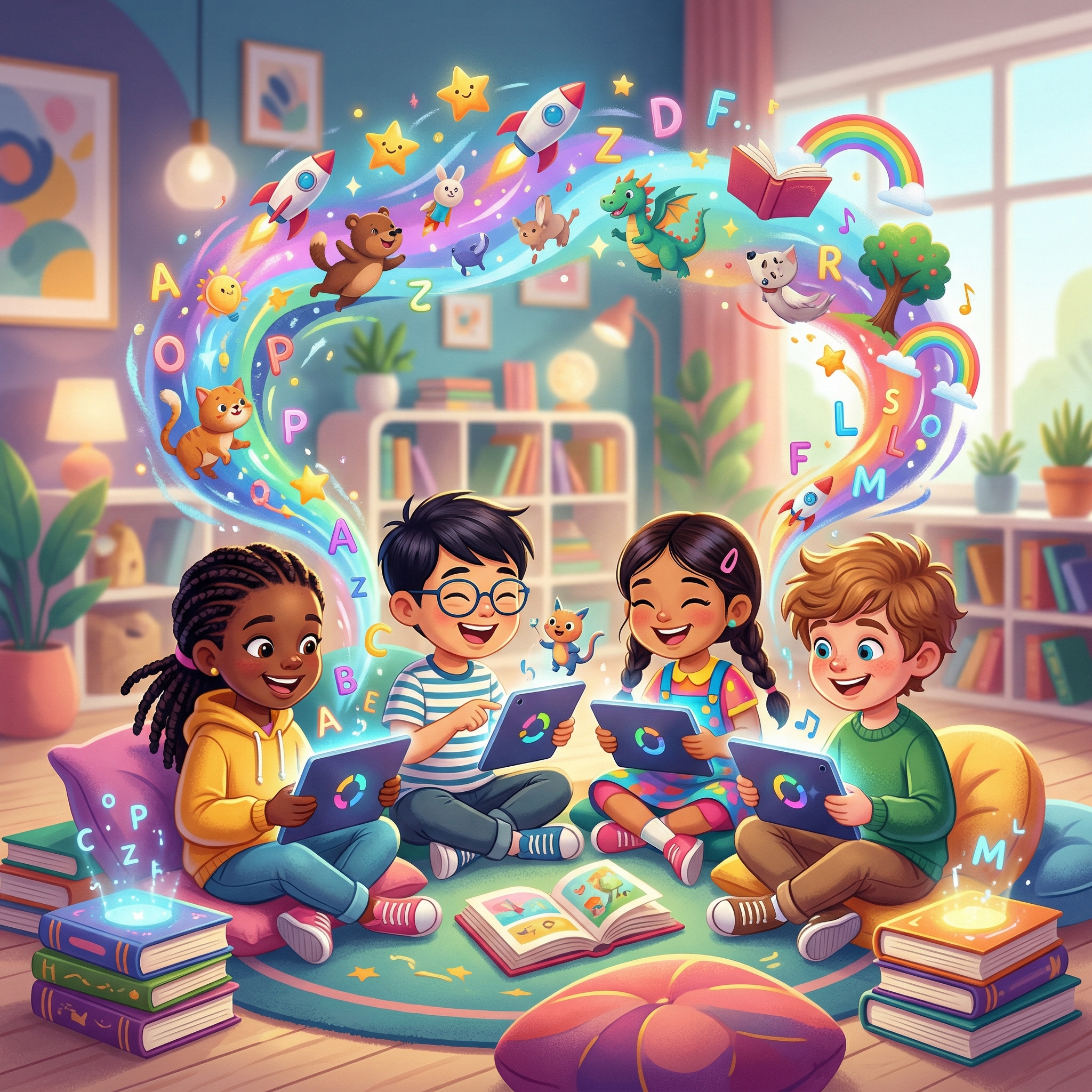
Learning to read and write is one of the most transformative skills children acquire, and today’s digital tools make this journey more engaging than ever before.
The landscape of early childhood education has undergone a remarkable transformation with the advent of mobile technology. Parents and educators now have access to countless applications designed specifically to support children during their literacy development journey. These innovative tools combine entertainment with educational content, creating an environment where learning feels less like work and more like play.
What makes literacy apps particularly valuable is their ability to adapt to individual learning paces. Unlike traditional classroom settings where one approach must serve many students, digital applications can provide personalized experiences that respond to each child’s unique needs and progress. This individualized approach helps build confidence while establishing fundamental reading and writing skills.


📱 Why Digital Tools Matter in Early Literacy Education
The integration of technology into literacy learning isn’t just about keeping up with modern trends. Research consistently shows that interactive digital experiences can enhance engagement and retention in young learners. When children interact with letters, sounds, and words through touch-based activities, they create multi-sensory memories that strengthen their understanding.
Mobile applications offer immediate feedback, which is crucial for developing readers and writers. When a child traces a letter correctly, the app responds with encouragement. When they sound out a word successfully, they receive instant validation. This real-time reinforcement helps children understand what they’re doing right and where they need more practice.
Beyond the educational benefits, literacy apps provide practical advantages for busy families. They transform waiting rooms, car rides, and quiet afternoons into productive learning opportunities. Instead of passive screen time, children engage in activities that directly support their academic development.

🎯 Essential Features That Define Quality Literacy Apps
Not all educational apps are created equal. The most effective literacy applications share certain characteristics that set them apart from simple games or entertainment platforms. Understanding these features helps parents and educators make informed choices about which tools will genuinely support learning goals.
Interactive Letter Recognition and Phonics
The foundation of reading begins with understanding letters and their corresponding sounds. Premium literacy apps introduce the alphabet through engaging animations and interactive challenges. Children don’t just see letters—they trace them, hear their sounds, and connect them to familiar words and objects.
Phonics instruction within these apps typically progresses from simple letter sounds to more complex combinations. This gradual scaffolding helps children build confidence as they master each level before moving forward. The best applications incorporate proven phonics methods while presenting them in fresh, entertaining formats.
Multisensory Learning Approaches
Touch, sight, and sound work together in effective literacy apps to create comprehensive learning experiences. When children trace the letter “B” with their finger while simultaneously hearing its sound and seeing a bouncing ball, they’re creating multiple neural pathways to that same information.
This multisensory approach mirrors best practices in traditional education but leverages technology’s unique capabilities. The tablet or smartphone becomes an interactive textbook that responds to every touch and provides limitless patience as children practice.
Progress Tracking and Adaptive Learning
Modern literacy applications include sophisticated systems that monitor each child’s progress. These tracking mechanisms identify areas where a child excels and topics that require additional practice. Based on this data, the app adjusts difficulty levels and suggests specific activities to address learning gaps.
For parents and teachers, these insights prove invaluable. Many apps generate reports showing which skills have been mastered and which need more attention, enabling adults to provide targeted support beyond screen time.
✏️ From Letters to Words: Building Blocks of Reading
The journey from recognizing individual letters to reading complete sentences involves several developmental stages. Quality literacy apps guide children through this progression systematically, ensuring they develop strong foundations before advancing to more complex skills.
Initial activities often focus on letter identification and formation. Children learn uppercase and lowercase versions, understanding that “A” and “a” represent the same letter. Tracing exercises help develop fine motor skills essential for handwriting, even as typing becomes increasingly prevalent.
As letter recognition solidifies, apps introduce simple consonant-vowel-consonant (CVC) words like “cat,” “dog,” and “sun.” These short words allow children to practice blending sounds together, a critical skill for reading fluency. Games might ask children to match pictures with corresponding words or arrange jumbled letters into correct sequences.
Sight word recognition represents another crucial component. High-frequency words like “the,” “and,” “is,” and “you” appear repeatedly in texts but don’t always follow standard phonics rules. Literacy apps use repetition and context to help children memorize these essential words, dramatically expanding their reading capabilities.
🎮 Making Learning Feel Like Play
One of the greatest strengths of literacy apps lies in their ability to disguise education as entertainment. Children who might resist traditional worksheets eagerly spend time with applications that present the same skills through games and challenges.
Gamification elements like points, badges, and unlockable content motivate children to continue practicing. A child might complete letter-tracing exercises not because they’re told to, but because they want to earn stars that unlock new characters or story chapters.
Narrative elements enhance engagement further. Some apps weave literacy lessons into adventure stories where children must read clues, spell words to overcome obstacles, or write messages to help characters. This contextualized learning helps children understand the practical purpose of reading and writing.
Character-driven experiences create emotional connections that sustain interest over time. When children develop affection for an app’s mascot or protagonist, they return repeatedly to spend more time with that character—and incidentally, more time practicing literacy skills.
👨👩👧 Supporting Parents as Learning Partners
The most effective use of literacy apps occurs when parents actively participate in their children’s digital learning experiences. Rather than viewing apps as electronic babysitters, families can treat them as tools that facilitate shared learning time.
Many applications include parent sections with tips for supporting literacy development beyond the screen. These resources might suggest conversation starters, related offline activities, or books that complement digital lessons.
Co-engagement transforms app time into bonding opportunities. When parents sit with children, discussing what they’re learning and celebrating achievements together, the educational impact multiplies. This involvement also helps parents understand exactly what their children are working on, enabling them to reinforce those concepts throughout daily routines.
Setting healthy boundaries around screen time remains important even with educational content. Experts generally recommend balancing digital learning with physical books, hands-on writing practice, and real-world literacy experiences like reading signs during walks or writing shopping lists together.
🌍 Accessibility and Inclusive Learning Opportunities
Literacy apps have democratized access to quality early education in unprecedented ways. Families who live far from excellent schools or lack resources for private tutoring can access premium educational content through affordable or free applications.
For children with learning differences, these digital tools often provide customization options unavailable in traditional settings. Speed adjustments, visual modifications, and alternative input methods accommodate diverse needs. Children who struggle with fine motor skills might benefit from larger touch targets, while those with auditory processing challenges can replay sounds as many times as needed.
Multilingual features expand learning opportunities for children growing up in bilingual households or learning English as an additional language. Many apps offer content in multiple languages, helping children develop literacy skills in their home language and new languages simultaneously.
Special education professionals increasingly incorporate literacy apps into intervention strategies for children experiencing reading difficulties. The patience, consistency, and individualized pacing these applications provide complement therapeutic approaches beautifully.
📚 Balancing Digital and Traditional Literacy Experiences
While literacy apps offer tremendous benefits, they work best as part of a comprehensive approach that includes physical books, handwriting practice, and human interaction. The goal isn’t to replace traditional methods but to enhance them with modern tools.
Physical books provide tactile experiences and teach page-turning mechanics that remain culturally relevant. The smell of books, the weight of them in small hands, and the ritual of bedtime stories create memories and associations that purely digital experiences cannot replicate.
Handwriting practice develops fine motor skills and cognitive connections that typing alone doesn’t address. Research suggests that forming letters by hand activates brain regions involved in thinking, language, and working memory differently than keyboard input.
Conversations with adults about stories, words, and ideas build vocabulary and comprehension in ways that even the most sophisticated app cannot match. Human interaction remains irreplaceable in language development.
🚀 Future Developments in Literacy Technology
The field of educational technology continues evolving rapidly, with emerging innovations promising even more effective literacy support. Artificial intelligence capabilities are becoming increasingly sophisticated, enabling apps to provide more nuanced feedback and truly personalized learning paths.
Voice recognition technology allows apps to listen as children read aloud, providing pronunciation corrections and fluency feedback. This creates opportunities for independent reading practice that previously required adult supervision.
Augmented reality features are beginning to appear in literacy apps, overlaying digital information onto physical environments. Imagine pointing a tablet at everyday objects and seeing their written names appear, or watching story characters emerge from book pages through a device’s camera.
Collaborative features enable children to practice literacy skills with peers remotely, combining social motivation with educational content. These connections can be particularly valuable for children in isolated areas or those who benefit from peer learning opportunities.
💡 Choosing the Right App for Your Child
With thousands of literacy apps available, selecting appropriate options can feel overwhelming. Start by considering your child’s current skill level and specific needs. An app perfect for a beginning reader might bore a more advanced student or frustrate a child just starting letter recognition.
Read reviews from other parents and educators, but remember that individual children respond differently to various approaches. What works brilliantly for one child might not engage another with different interests or learning styles.
Take advantage of free trials when available. Most premium apps offer limited free content or trial periods, allowing you to evaluate whether the interface, difficulty level, and teaching approach suit your child before committing financially.
Pay attention to your child’s responses. Genuine learning engagement looks different from addictive game mechanics. Children should feel challenged but capable, interested but not overstimulated. If an app causes frustration or creates unhealthy attachment patterns, it’s not the right fit regardless of its educational credentials.
🌟 Transforming Screen Time Into Learning Time
The conversation around children and screens often focuses on limiting exposure, but quality literacy apps demonstrate that not all screen time carries equal value. When thoughtfully selected and appropriately used, these digital tools transform devices into powerful educational instruments.
Establishing routines around educational app use helps children understand that tablets and phones serve purposes beyond entertainment. Designating specific times for learning apps creates structure while ensuring balanced media consumption.
Celebrating milestones achieved through app-based learning reinforces the value of these activities. When children complete difficult levels or master new skills, acknowledging their hard work builds positive associations with learning itself.
The most successful integration of literacy apps into family life happens when technology serves clear educational goals while complementing rich, varied learning experiences. These applications represent tools—remarkable tools, certainly—but tools nonetheless that work best in capable, caring hands.
As we navigate an increasingly digital world, equipping children with strong literacy skills remains as essential as ever. The methods may evolve, incorporating touchscreens alongside textbooks and interactive games alongside worksheets, but the fundamental goal endures: helping every child unlock the transformative power of reading and writing. Modern literacy apps, when used thoughtfully, contribute meaningfully to this timeless educational mission.
