
Anúncios
The clash between Brazil and Haiti on the World Cup stage represents more than just a football match—it’s a celebration of passion, resilience, and the beautiful game’s power to unite nations.
When these two nations meet on football’s grandest stage, spectators witness a fascinating contrast of styles, histories, and aspirations.
Brazil, the five-time world champions with their samba-infused football philosophy, face Haiti, a nation whose football journey embodies determination against all odds.
This encounter captures the essence of what makes the World Cup truly special—the coming together of diverse footballing cultures, each bringing their unique flavor to the global tournament.
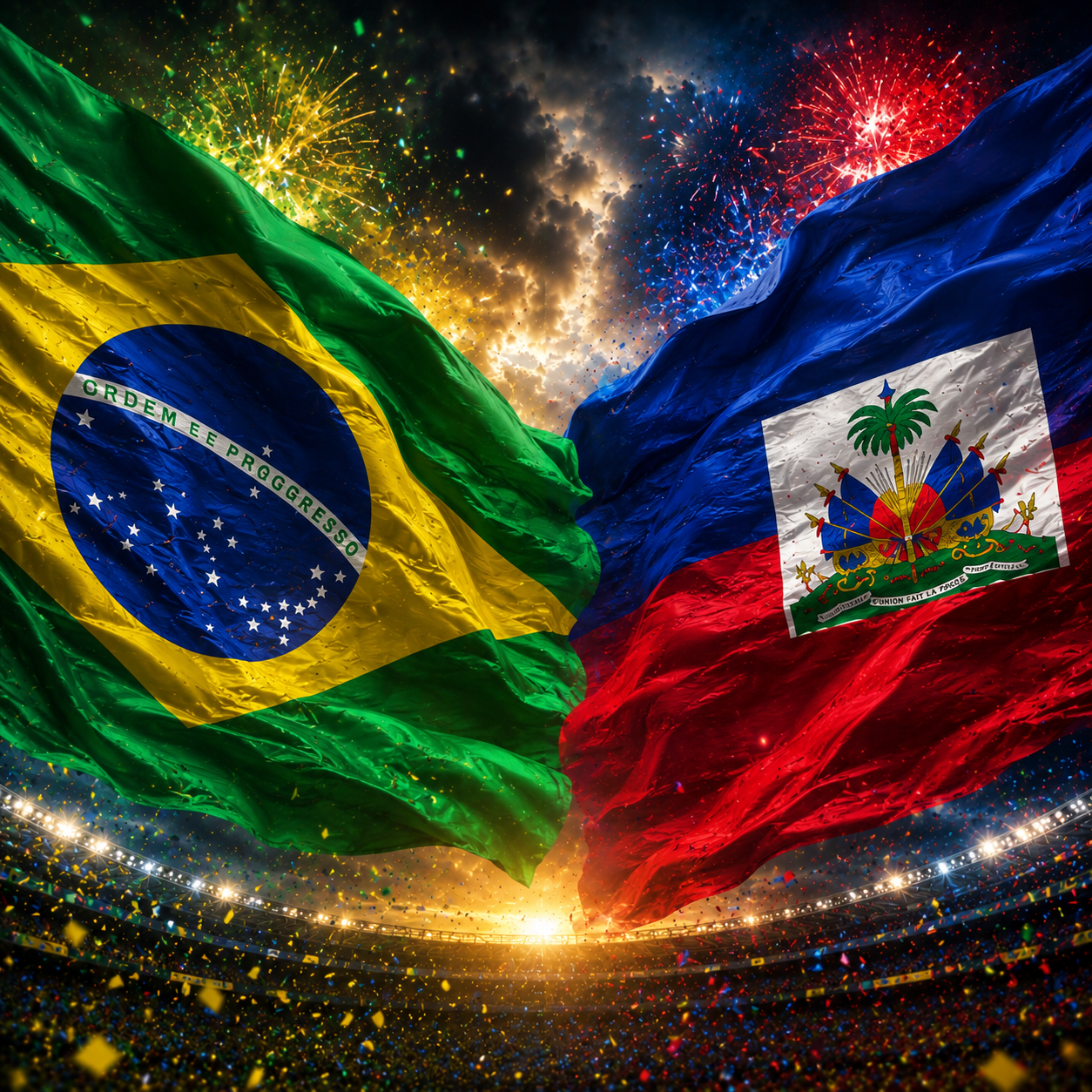
🏆 <strong>Brasil 🇧🇷 x Haiti 🇭🇹</strong>
The anticipation builds not just around the result, but around the stories, emotions, and unforgettable moments that such matches create.
⚽ The Brazilian Football Legacy: More Than Just a Game
Brazil’s relationship with football transcends sport—it’s woven into the nation’s cultural fabric. From the beaches of Rio to the streets of São Paulo, football represents identity, joy, and national pride.
The Seleção carries the weight of expectation every time they step onto the pitch, particularly at World Cup tournaments.
The Brazilian style, known as “Jogo Bonito” or “The Beautiful Game,” emphasizes creativity, technical skill, and flair.
Legendary players like Pelé, Ronaldo, Ronaldinho, and more recently Neymar have defined generations with their magical abilities. This attacking philosophy makes Brazil one of the most entertaining teams to watch on the global stage.
With five World Cup titles (1958, 1962, 1970, 1994, and 2002), Brazil stands alone as the most successful nation in tournament history.
Each victory added chapters to football folklore, with moments that remain etched in collective memory—Pelé’s brilliance, Carlos Alberto’s iconic goal, Ronaldo’s redemption in 2002.
🌟 Brazilian Stars Who Light Up the World Stage
Every World Cup sees Brazil field exceptional talent capable of turning matches single-handedly. The current generation continues this tradition, blending traditional Brazilian flair with modern tactical sophistication.
Players who operate at the highest levels of European football bring their experience to represent the yellow and green.
The pressure on Brazilian players is immense. Fans demand not just victories, but victories achieved with style. This expectation creates both motivation and burden, shaping how the team approaches each match.
Against opponents like Haiti, Brazil must balance dominance with respect, entertainment with efficiency.
🇭🇹 Haiti’s Inspiring Football Journey: Rising Against Adversity
Haiti’s football story differs dramatically from Brazil’s decorated history, yet it’s equally compelling.
For a nation that has faced tremendous challenges—natural disasters, economic hardship, and political instability—football represents hope, unity, and a pathway to international recognition.
The Haitian national team, known as “Les Grenadiers,” carries the dreams of millions whenever they compete.
Qualifying for a World Cup would represent one of football’s greatest achievements, considering the limited resources and infrastructure available compared to traditional powerhouses.
Haitian football has produced talented individuals who’ve competed internationally, often overcoming significant obstacles to reach professional levels.
These players become heroes back home, inspiring younger generations to pursue their football dreams despite difficult circumstances.
💪 The Spirit of Haitian Football: Garra and Determination
What Haiti might lack in resources, they compensate with heart. “Garra”—that untranslatable quality combining courage, determination, and fighting spirit—defines Haitian football. Every match is approached with maximum effort, every opponent respected but never feared.
Haitian players understand that representing their nation means carrying the hopes of people who’ve endured tremendous hardship. This responsibility translates into passionate performances where giving up is simply not an option.
Against technically superior opponents like Brazil, this mentality becomes Haiti’s greatest weapon.
📊 Tactical Analysis: When Different Styles Collide
A Brazil vs. Haiti encounter presents fascinating tactical contrasts. Brazil typically employs possession-based football, controlling tempo and creating chances through patient buildup combined with sudden explosive attacks.
Their defenders are comfortable on the ball, midfielders orchestrate play, and forwards operate with creative freedom.
Haiti would likely adopt a more pragmatic approach, recognizing the quality gap. Organized defensive structures, compact lines, and disciplined positioning would be essential.
Counter-attacking opportunities would be precious, requiring clinical finishing to capitalize on limited chances.
🎯 Key Tactical Battles to Watch
The midfield battle would prove crucial. Brazil’s technical superiority in this area allows them to dictate proceedings, but Haiti’s energy and commitment could disrupt rhythm.
Winning second balls, closing passing lanes, and maintaining defensive discipline would be Haiti’s priorities.
Wide areas often decide such matches. Brazilian wingers with their pace and skill can stretch defensive lines, creating space for central attackers. Haiti’s full-backs would face constant pressure, requiring concentration and teamwork to prevent being overwhelmed.
Set pieces offer Haiti potential opportunities. Against physically stronger opponents, defensive discipline during Brazilian attacks and organization during their own set plays could provide rare scoring chances.
Every corner, free kick, and throw-in in dangerous areas becomes valuable.
🌍 The Global Stage: What Makes World Cup Encounters Special
World Cup matches carry unique intensity and emotion. Unlike club football or even other international competitions, the World Cup represents ultimate glory.
Players perform knowing billions watch worldwide, that their actions might define careers and create lasting memories.
For Brazil, expectation reaches fever pitch. Anything less than excellence disappoints passionate supporters. Each match represents another step toward that elusive sixth title, with pressure mounting as tournaments progress.
For Haiti, simply reaching the World Cup would constitute triumph. Every moment on that stage—warming up in iconic stadiums, hearing their anthem played, competing against the world’s best—represents validation of years of struggle and dedication.
🎪 The Atmosphere: Fans, Colors, and Celebration
Brazilian supporters create unforgettable atmospheres. The yellow shirts, the drums, the samba rhythms—Brazilian fans transform stadiums into carnival-like celebrations. Their presence energizes players and intimidates opponents.
Haitian supporters, though perhaps fewer in number at global tournaments, match anyone in passion. Their pride in representing their nation manifests in loud, continuous support regardless of scorelines. The red and blue colors wave proudly, voices rising in unison.
When these fan bases meet, the cultural exchange enriches the World Cup experience. Mutual respect between supporters, shared love for football, and appreciation for different cultures exemplify the tournament’s power to bring humanity together.
🏆 Historical Context: Previous Encounters and Regional Dynamics
While Brazil and Haiti haven’t frequently met in competitive World Cup matches, regional competitions have occasionally brought them together. CONCACAF-CONMEBOL encounters, though rare, provide context for understanding stylistic differences between regions.
Brazil’s dominance in South American football is unquestioned. They’ve won the Copa América multiple times and consistently rank among the world’s elite. Their players feature in top European leagues, ensuring continuous exposure to the highest competitive levels.
Haiti competes in CONCACAF, facing North and Central American and Caribbean opposition. The region’s football has grown significantly, with nations like Mexico, the United States, and Costa Rica achieving World Cup success. Haiti aspires to join their ranks.
📈 The Development Gap and Its Implications
The infrastructure and development gap between Brazil and Haiti significantly impacts their football programs.
Brazil boasts world-class training facilities, professional leagues that attract global talent, and extensive youth development systems identifying and nurturing talent nationwide.
Haiti works with considerably fewer resources. Training facilities are basic, domestic leagues operate with limited funding, and promising players often must leave the country to develop professionally.
Despite these challenges, Haitian football persists, driven by passion rather than infrastructure.
This disparity makes any competitive encounter between these nations remarkable. It highlights football’s democratic nature—that on the pitch, with a ball and goals, talent and determination can challenge even the most significant resource advantages.
💫 Memorable Moments: When Underdogs Create Magic
World Cup history celebrates underdog triumphs. North Korea defeating Italy in 1966, Cameroon beating Argentina in 1990, Senegal stunning France in 2002—these moments remind us that football’s beauty lies partly in its unpredictability.
While Brazil enters any match as favorites, complacency can prove costly. Motivated underdogs playing without pressure sometimes produce extraordinary performances. Haiti would approach such an encounter with nothing to lose and everything to gain.
Individual brilliance can change everything. One moment of magic—a spectacular goal, a crucial save, a perfectly timed tackle—might shift momentum. Haitian players would understand that creating even one such moment could etch their names in their nation’s sporting history.
🎭 The Human Stories Behind the Match
Every international match features personal narratives. Brazilian players carrying the expectations of millions, some seeking to cement legendary status, others fighting to establish themselves among the elite. The pride of wearing that iconic yellow shirt drives them forward.
Haitian players carry different but equally powerful motivations. Many have overcome poverty, limited opportunities, and skepticism to reach professional levels.
Representing Haiti on the World Cup stage would validate their sacrifices and inspire countless others facing similar struggles.
Coaches on both sides face immense pressure. Brazil’s manager must satisfy demanding fans while implementing effective tactics. Haiti’s coach must organize his team to compete while maintaining morale against difficult odds.
Both seek that perfect tactical plan to achieve their objectives.
🌐 Global Impact: Beyond the Scoreline
A Brazil vs. Haiti World Cup match transcends the ninety minutes played. For global audiences, it showcases different footballing philosophies, cultural expressions, and human stories.
Viewers worldwide connect with players’ emotions, understanding that sport reflects broader human experiences.
For Haiti, international exposure brings attention to their nation beyond typical narratives of difficulty. Football provides a platform to showcase resilience, talent, and cultural richness.
Young Haitians watching their heroes compete against Brazil’s stars see possibilities for their own futures.
Brazil reinforces its position as a football superpower, but also demonstrates respect for all opponents. How they approach such matches—balancing dominance with sportsmanship—reflects on their footballing culture and national character.
📺 Media Coverage and Digital Engagement
Modern World Cups generate unprecedented media coverage. Every match is analyzed from countless angles, with pre-game predictions, live commentary, post-match analysis, and social media discussions engaging millions.
Brazil vs. Haiti would attract significant attention despite the apparent mismatch on paper.
Digital platforms allow fans worldwide to participate in real-time conversations, sharing reactions, creating content, and connecting across borders. Hashtags trend globally, memes emerge instantly, and memorable moments spread virally within seconds.
This connectivity enhances the World Cup experience, transforming isolated viewers into members of a global community united by football passion. Fans in Port-au-Prince and São Paulo, despite geographic distance, share immediate reactions to the same moments.
🔮 Looking Forward: The Future of International Football
The football landscape continues evolving. Increased investment in youth development, improved coaching education, and tactical innovations raise overall competitive levels. Nations previously considered outsiders increasingly challenge traditional powers.
For Haiti, continued development could eventually see them competing regularly at World Cups. Infrastructure improvements, increased funding, and stronger domestic leagues would provide foundations for sustained success.
The passion and talent exist—proper support could unlock enormous potential.
Brazil faces the challenge of maintaining their elite status amid growing global competition. While their talent pool remains deep, complacency risks allowing others to close the gap.
Continued innovation in tactics, training methods, and player development remains essential.
⚡ The Essence of Competition: Respect, Passion, and Celebration
Ultimately, Brazil vs. Haiti represents everything beautiful about international football. The contrast in histories and resources makes the encounter compelling. Brazil’s responsibility to perform with excellence meets Haiti’s determination to compete with dignity and pride.
Respect between competitors elevates sport beyond mere competition. Acknowledging opponents’ journeys, celebrating their achievements, and competing fairly creates meaningful experiences that transcend results. Both nations understand football’s power to inspire and unite.
The World Cup stage allows nations to showcase their identity, values, and culture. Brazil’s joyful, expressive approach contrasts with Haiti’s gritty determination, yet both embody authentic expressions of who they are. This diversity makes the tournament truly global.
🎉 The Beautiful Game Unites Us All
When the final whistle blows on a Brazil vs. Haiti match, the scoreline tells only part of the story. The real narrative encompasses individual battles, tactical adjustments, emotional moments, and the shared human experience of competition at the highest level.
Players from both teams will have given everything, left nothing behind, honored their nations through effort and commitment. Fans will remember not just goals scored or saves made, but the passion displayed, the respect shown, and the celebration of football itself.
These matches remind us why we love football. The unpredictability, the emotion, the stories of triumph and heartbreak—all played out on grass rectangles in stadiums around the world.
Brazil and Haiti, despite their differences, share this common language spoken through passes, tackles, and goals.
The World Cup’s magic lies in bringing together nations who might otherwise never interact, creating shared experiences and mutual understanding.
Football becomes the bridge connecting different worlds, proving that passion for the beautiful game transcends all boundaries.
As we anticipate future encounters between these nations, we celebrate not just the spectacle of competition, but the values that make football truly special—respect, determination, joy, and the unwavering belief that on any given day, anything is possible when that whistle blows and the ball starts rolling. 🌟⚽
