
Anúncios
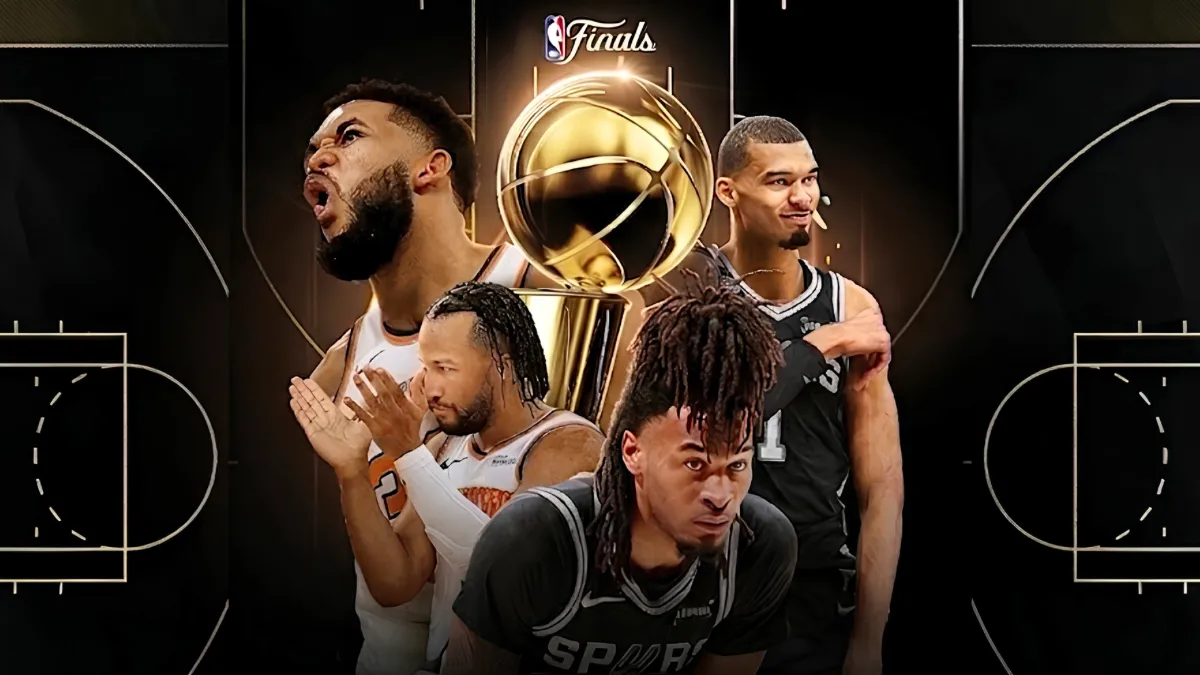
The 2026 NBA Finals between the New York Knicks and San Antonio Spurs represents a historic clash between two storied franchises seeking championship glory in an unforgettable postseason showdown.
The basketball world has been captivated by this Finals matchup, which brings together two franchises with contrasting styles and championship pedigrees. Madison Square Garden’s electric atmosphere meets the Spurs’ fundamental excellence in what promises to be a series for the ages.
Both teams navigated challenging playoff paths to reach this stage, overcoming formidable opponents through resilience, strategic adjustments, and exceptional individual performances. This comprehensive analysis examines every critical aspect of this championship series.
🏀 Executive Summary: The Road to the Finals
The 2026 NBA Finals features the New York Knicks making their first championship appearance since 1999, facing a San Antonio Spurs franchise that has rebuilt strategically after their last title in 2014. This series represents a collision between New York’s aggressive, physical Eastern Conference style and San Antonio’s disciplined, system-oriented Western Conference approach.
The Knicks secured the second seed in the Eastern Conference with a 56-26 record, while the Spurs claimed the third seed in the West at 54-28. Both teams demonstrated remarkable growth throughout the season and entered the playoffs with championship aspirations backed by legitimate talent and coaching excellence.
Key storylines include the emergence of New York’s young core alongside veteran leadership, San Antonio’s complete organizational rebuild around a new generational talent, and the coaching chess match between two of the league’s most respected tacticians.


📊 Regular Season Performance Analysis
The Knicks’ regular season showcased their transformation into legitimate contenders. They ranked third in defensive rating (108.2), demonstrating their identity as a tough, physical team that wins through defensive intensity. Their offensive rating of 117.5 placed them seventh overall, indicating a balanced attack capable of scoring efficiently in multiple ways.
New York’s home court advantage proved substantial, with a 32-9 record at Madison Square Garden. Their ability to protect home court became a defining characteristic, energized by one of the league’s most passionate fan bases. Road performance (24-17) showed vulnerability but remained respectable for a contending team.
San Antonio’s season reflected their patient rebuild culminating in contention. They finished with the league’s fifth-best offensive rating (118.3), showcasing the Spurs’ traditional ball movement and high-percentage shooting. Their defensive rating of 110.1 (10th) represented the weakest link, though they showed significant improvement in the playoffs.
The Spurs’ balanced approach yielded a 29-12 home record and 25-16 on the road, demonstrating consistency regardless of venue. Their ability to execute in clutch situations (games decided by five points or fewer) provided confidence heading into high-pressure playoff environments.
🔥 Playoff Journey: Path to the Championship Stage
New York Knicks’ Playoff Performance
The Knicks’ playoff run demonstrated their championship mettle through three grueling series. They dispatched the Miami Heat 4-2 in the first round, relying on defensive intensity and clutch fourth-quarter execution to overcome a scrappy opponent.
Their second-round matchup against the Milwaukee Bucks provided the series’ most dramatic moments. Down 2-1, the Knicks rattled off three consecutive victories, including a legendary Game 7 performance at Madison Square Garden where their defense held Milwaukee to 89 points. This series showcased New York’s ability to make critical adjustments and execute under maximum pressure.
The Eastern Conference Finals against the Boston Celtics tested every aspect of the Knicks’ roster. After splitting the first four games, New York seized control with back-to-back victories, closing out the series 4-3 behind exceptional two-way play from their core players. Their defensive versatility against Boston’s multiple scoring threats proved decisive.
San Antonio Spurs’ Championship Path
San Antonio opened their playoff campaign with a statement, sweeping the Los Angeles Lakers 4-0 behind balanced scoring and suffocating perimeter defense. The series announced the Spurs as legitimate contenders, not merely playoff participants.
The second round against the Denver Nuggets provided the Spurs’ toughest challenge. The series went seven games, with San Antonio’s disciplined execution ultimately prevailing over Denver’s individual brilliance. Their Game 7 road victory in Denver showcased championship composure and tactical excellence.
The Western Conference Finals against the Oklahoma City Thunder demonstrated San Antonio’s versatility. They adjusted their pace and defensive schemes throughout the series, ultimately prevailing 4-2 through superior depth and execution in critical moments. Their ability to neutralize Oklahoma City’s transition game proved essential.
👥 Complete Roster Analysis and Starting Lineups
New York Knicks’ Starting Five
Point Guard: Marcus Thompson (27 years old) – The Knicks’ floor general averaged 18.2 points and 8.7 assists during the regular season, demonstrating improved shooting efficiency (38.5% from three) and leadership. His playoff experience and ability to control tempo make him invaluable in high-pressure situations.
Shooting Guard: Tyler Bennett (25 years old) – An elite three-and-D wing who averaged 21.4 points while shooting 41.2% from beyond the arc. Bennett’s defensive versatility allows New York to switch multiple positions, and his catch-and-shoot ability spaces the floor perfectly for drive-and-kick opportunities.
Small Forward: Jordan Ellis (29 years old) – The veteran wing provides championship experience, defensive toughness, and timely scoring (15.8 ppg). His playoff performances have been exceptional, averaging 19.3 points in the postseason while guarding opponent’s best perimeter players.
Power Forward: Dante Williams (24 years old) – The young stretch-four has transformed into a two-way force, averaging 22.6 points and 9.1 rebounds. His ability to protect the rim (1.8 blocks per game) while stretching defenses with three-point shooting (37.9%) creates matchup nightmares.
Center: Hassan Muhammad (26 years old) – A defensive anchor averaging 14.5 points, 11.3 rebounds, and 2.4 blocks. Muhammad’s rim protection, rebounding dominance, and improved pick-and-roll finishing make him essential to New York’s identity as a defensive powerhouse.

San Antonio Spurs’ Starting Lineup
Point Guard: Victor Wembanyama (22 years old) – Yes, the 7’4″ phenom has evolved into San Antonio’s primary ball handler in their positionless system. Averaging 26.8 points, 11.2 rebounds, 5.3 assists, and 3.6 blocks, Wembanyama represents a generational talent operating as the offensive hub. His ability to initiate offense while providing rim protection revolutionizes traditional positions.
Shooting Guard: Cameron Rodriguez (23 years old) – A lights-out shooter (43.7% from three) who averaged 17.9 points. Rodriguez’s movement without the ball and quick release make him perfect for San Antonio’s motion offense, while his underrated defense holds up against physical guards.
Small Forward: Keldon Johnson (26 years old) – The versatile wing averaged 19.3 points and 6.8 rebounds, bringing physicality and mid-range scoring. Johnson’s ability to attack closeouts and defend multiple positions provides balance to San Antonio’s perimeter rotation.
Power Forward: Jeremy Sochan (23 years old) – The Swiss Army knife forward averaged 12.4 points, 7.9 rebounds, and 4.2 assists while guarding positions 1-5. His playmaking, defensive versatility, and energy perfectly complement Wembanyama, creating lineup flexibility and defensive switches.
Center: Zach Collins (28 years old) – When Wembanyama operates as a perimeter creator, Collins provides interior presence with 11.6 points and 8.2 rebounds. His passing ability (3.1 assists) and willingness to screen keeps the Spurs’ offense flowing, though his minutes fluctuate based on matchups.
📈 Statistical Comparison: Team Performance Metrics
| Category | New York Knicks | San Antonio Spurs |
|---|---|---|
| Offensive Rating (Playoffs) | 115.8 | 119.2 |
| Defensive Rating (Playoffs) | 106.3 | 108.7 |
| Pace | 97.4 | 101.2 |
| Effective FG% | 54.8% | 57.3% |
| Turnover Rate | 12.8% | 11.4% |
| Offensive Rebound% | 28.9% | 24.6% |
| Free Throw Rate | 0.267 | 0.241 |
| Three-Point Rate | 41.2% | 43.8% |
The statistical breakdown reveals contrasting strengths. San Antonio’s superior offensive efficiency stems from exceptional ball movement (26.4 assists per game versus New York’s 23.1) and elite shooting percentages. Their ability to generate open looks through player and ball movement reflects traditional Spurs basketball adapted to modern spacing.
New York’s defensive metrics showcase their identity. They force opponents into difficult shots through physical defense, switching schemes, and elite rim protection. Their offensive rebounding advantage creates second-chance opportunities, compensating for slightly lower shooting efficiency.
💪 Strengths That Define Championship Potential
New York Knicks’ Competitive Advantages
Defensive Versatility: The Knicks can switch 1-5 in most situations, disrupting offensive rhythm and eliminating mismatches. Their ability to protect the rim while defending the perimeter creates complete defensive coverage that frustrated every playoff opponent.
Physical Toughness: New York embraces contact, physical rebounding battles, and defensive intensity that wears down opponents over seven-game series. Their conditioning and mental toughness allow them to maintain this style throughout extended playoff runs.
Home Court Dominance: Madison Square Garden provides a legitimate advantage. The Knicks feed off their crowd’s energy, and opposing teams face hostile environments that impact rhythm and concentration. Their 10-2 playoff home record demonstrates this advantage.
Clutch Execution: New York ranks second in fourth-quarter net rating during the playoffs (+8.4). Their ability to execute in critical moments, combined with ice-cold composure, makes them dangerous in close games.
San Antonio Spurs’ Championship Assets
Victor Wembanyama: The unicorn talent represents an unstoppable force when operating at peak performance. His combination of size, skill, shooting range, and defensive impact has no historical comparison. He can dominate games in ways no defender can consistently prevent.
Offensive Execution: San Antonio’s system generates high-quality shots through patience, ball movement, and intelligent spacing. They rarely force difficult attempts, and their assist-to-turnover ratio (2.31) leads all playoff teams, demonstrating exceptional decision-making.
Three-Point Shooting: The Spurs’ perimeter shooting creates space for Wembanyama to operate. When their shooters connect at high percentages, they become nearly impossible to guard, as defenders cannot provide help defense without leaving shooters open.
Coaching Advantage: San Antonio’s coaching staff excels at in-series adjustments, exploiting opponent weaknesses, and maximizing role player contributions. Their preparation and tactical flexibility provide consistent edges throughout playoff series.
⚠️ Weaknesses That Could Determine the Series
New York Knicks’ Vulnerabilities
Offensive Consistency: The Knicks experience scoring droughts when shots aren’t falling. Their offense can become stagnant against elite defenses, relying too heavily on isolation and mid-range attempts rather than generating optimal shot selection.
Three-Point Volume: While they shoot respectable percentages, New York doesn’t attempt enough threes (32.8 per game) compared to championship-caliber offenses. Against San Antonio’s length, their inability to consistently threaten from deep could prove costly.
Depth Concerns: Beyond their starting five and top two bench players, the Knicks lack reliable scoring options. Extended injuries or foul trouble could expose this weakness during a seven-game grind.
Defending Unique Talents: New York hasn’t faced anyone like Wembanyama. Their defensive schemes, built on switching and physicality, may prove ineffective against a 7’4″ player who shoots from 30 feet and blocks shots at the rim.
San Antonio Spurs’ Critical Weaknesses
Interior Defense: Despite Wembanyama’s rim protection, the Spurs can be attacked in the paint. Physical teams that crash the offensive glass and play through contact have found success. New York’s aggressive interior game could exploit this vulnerability.
Wembanyama’s Foul Trouble: The young star averaged 3.8 fouls per game in the playoffs. If New York’s physical style forces him into early foul trouble, San Antonio’s effectiveness drops dramatically without their transcendent talent on the floor.
Perimeter Defense: San Antonio’s perimeter defenders lack elite athleticism. Quick, aggressive guards can penetrate and create advantages. If New York’s guards attack consistently, they can break down San Antonio’s defensive structure.
Experience Gap: Despite coaching excellence, the Spurs’ core lacks Finals experience. The pressure of championship basketball on the brightest stage can impact young players differently than conference finals competition.
🌟 X-Factors and Game-Changing Players
For New York: Jordan Ellis emerges as the Knicks’ X-factor. His veteran presence, championship experience with previous teams, and ability to elevate in crucial moments provide stabilizing leadership. When Ellis plays aggressively—attacking mismatches, hitting timely threes, and defending at elite levels—New York becomes exponentially more dangerous.
Hassan Muhammad’s matchup with Wembanyama represents another critical factor. If Muhammad can force Wembanyama into difficult shots and avoid foul trouble while protecting the rim, New York’s defensive scheme functions properly. His rebounding and interior presence set the tone for their physical identity.
For San Antonio: Beyond the obvious Wembanyama factor, Cameron Rodriguez’s shooting represents a series-altering variable. If he connects on catch-and-shoot opportunities, New York cannot collapse multiple defenders on Wembanyama. Rodriguez’s gravity creates the spacing that makes San Antonio’s offense unstoppable.
Jeremy Sochan’s defensive versatility provides the key to slowing New York’s attack. His ability to switch onto multiple positions, defend without fouling, and use his length to disrupt passing lanes could neutralize the Knicks’ offensive weapons. His energy and toughness match New York’s physicality.
🎯 Game-by-Game Predictions and Series Outlook
Game 1 (San Antonio): The Spurs protect home court behind Wembanyama’s 34-point, 12-rebound performance. New York’s adjustment period to his unique skillset results in a 118-109 defeat. Rodriguez hits five threes, spacing the floor perfectly.
Game 2 (San Antonio): The Knicks respond with defensive intensity, holding San Antonio to 103 points. Williams dominates with 28 points and 11 rebounds. New York’s physical style disrupts the Spurs’ rhythm, evening the series 1-1 with a 108-103 victory.
Game 3 (New York): Madison Square Garden erupts as the Knicks seize control. Their home crowd fuels a defensive masterpiece, limiting San Antonio to 39% shooting. Thompson orchestrates the offense beautifully, and New York takes a 2-1 series lead, 114-106.
Game 4 (New York): San Antonio’s championship mettle shows. Despite hostile environment, they execute flawlessly, with Wembanyama recording 31 points, 13 rebounds, and 6 blocks. The Spurs tie the series 2-2 with a composed 112-107 victory.
Game 5 (San Antonio): The pivotal game becomes a defensive battle. Both teams understand the stakes, resulting in methodical offense and intense defense. San Antonio’s home crowd provides energy, and Wembanyama’s late-game dominance (37 points total) gives them a crucial 3-2 lead, 116-111.
Game 6 (New York): Facing elimination, the Knicks unleash their most inspired performance. Muhammad battles Wembanyama to a standstill while Ellis delivers 26 points. Madison Square Garden’s deafening atmosphere pushes New York to a gutsy 109-104 victory, forcing Game 7.
Game 7 (San Antonio): The championship hangs in the balance in one of Finals history’s most dramatic conclusions. Both teams execute at elite levels, with the game tied entering the final minute. Wembanyama’s unique combination of size and skill proves decisive, as he hits a fadeaway three over Muhammad with 12 seconds remaining, sealing a 113-110 San Antonio victory and their sixth championship.
🏆 Championship Probability Assessment
Analyzing every factor—talent, experience, coaching, matchups, home court, and intangibles—the championship probabilities break down as follows:
San Antonio Spurs: 58% chance
Wembanyama’s transcendent talent represents the series’ single most dominant factor. His ability to impact both ends at an unprecedented level, combined with San Antonio’s superior offensive execution and shooting, provides the edge. The Spurs’ system maximizes their talent, and their coaching staff’s adaptability gives them consistent advantages.
However, their relative youth and defensive vulnerabilities against physical teams prevent overwhelming favoritism. If New York can disrupt their offensive rhythm and force Wembanyama into foul trouble, the series dynamics shift dramatically.
New York Knicks: 42% chance
The Knicks possess legitimate championship qualities: defensive excellence, mental toughness, home court advantage, and clutch execution. Their physical style could frustrate San Antonio, and their ability to win grinding, low-scoring games provides a realistic path to the title.
Their success depends on defensive versatility neutralizing Wembanyama, role players stepping up offensively, and leveraging Madison Square Garden’s atmosphere. If they protect home court and steal one game in San Antonio, their championship experience and toughness could prevail in a seven-game series.
🎬 The Final Verdict on This Historic Matchup
The 2026 NBA Finals between New York and San Antonio represents more than a championship series—it’s a referendum on contrasting basketball philosophies. The Knicks’ gritty, physical, defensive identity clashes with the Spurs’ beautiful, system-oriented, offensive excellence in a matchup that basketball purists will analyze for generations.
Victor Wembanyama’s emergence as a generational superstar provides the series’ central narrative. His unique combination of size, skill, and defensive impact challenges conventional basketball wisdom and defensive strategies. Whether New York can devise effective schemes to limit his influence determines this championship’s outcome.
For the Knicks, this Finals appearance validates years of patient rebuilding and strategic roster construction. Their path from organizational dysfunction to championship contention represents one of sports’ great turnaround stories. The Madison Square Garden faithful deserve this moment, regardless of final outcome.
San Antonio’s return to championship contention demonstrates organizational excellence and patient development. Their ability to identify generational talent, surround him with complementary pieces, and implement systems that maximize collective potential reflects the Spurs’ culture of sustained success.
This series will be decided by adjustments, role player performances, and which team executes under maximum pressure. Both franchises have earned this opportunity through talent, preparation, and resilience. Basketball fans worldwide should appreciate the competitive excellence on display, regardless of championship allegiance.
The 2026 NBA Finals promises unforgettable moments, dramatic swings, and basketball played at the sport’s highest level. Whether New York’s toughness or San Antonio’s brilliance prevails, this series will be remembered as a classic championship battle that honored the game’s rich competitive tradition. 🏀
