
Anúncios
Article: Best Literacy Apps for Early Learners in 2025
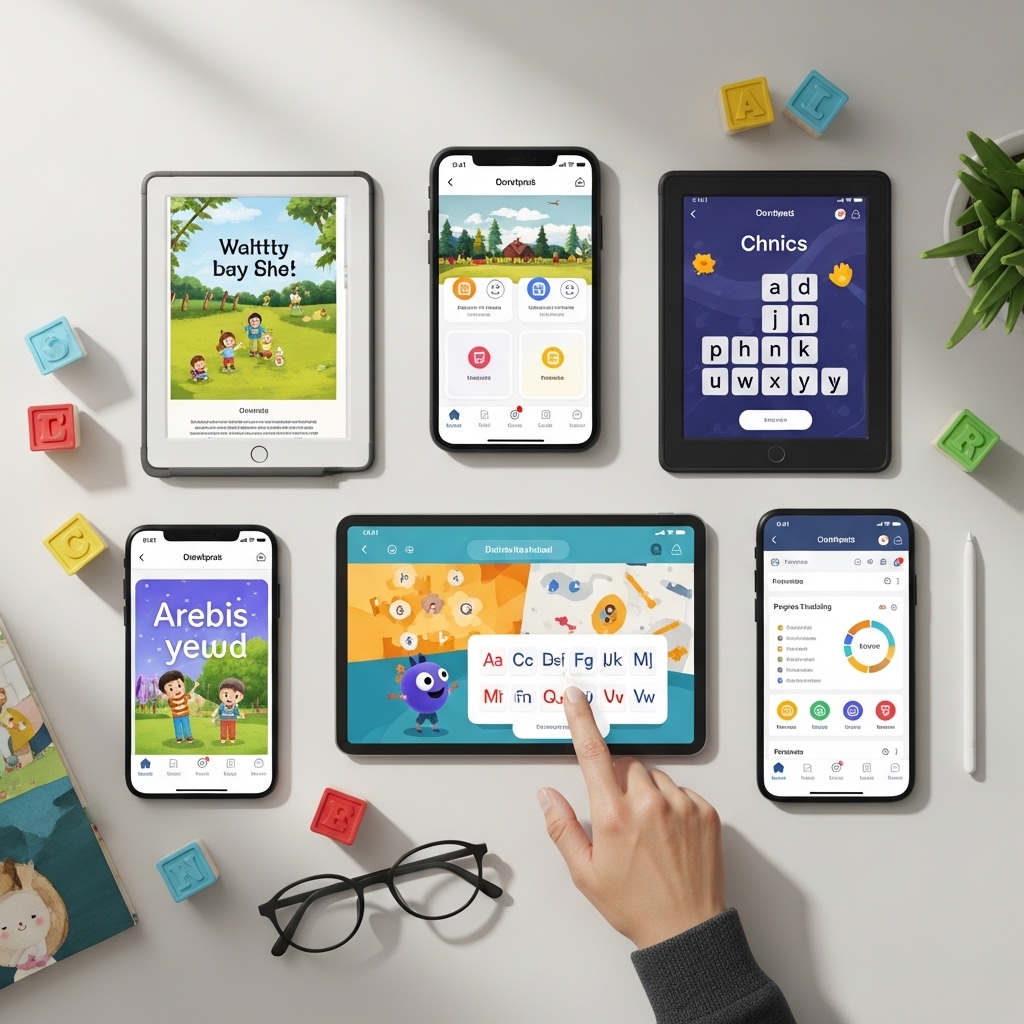
Learning to read and write is one of the most important milestones in a child’s education, and literacy apps are transforming how young learners develop these essential skills.

The digital age has brought unprecedented opportunities for education, especially for children in their formative years. Literacy apps combine engaging visuals, interactive elements, and proven educational methodologies to create experiences that captivate young minds while building foundational reading and writing skills.
Parents and educators are increasingly turning to these digital tools as complementary resources that reinforce classroom learning and make practice time more enjoyable. When chosen carefully and used appropriately, literacy apps can significantly accelerate a child’s journey toward confident reading and comprehension.
📱 Why Literacy Apps Matter in Modern Education
Traditional literacy instruction remains valuable, but technology has opened new pathways for engaging reluctant readers and providing personalized learning experiences. Modern literacy apps adapt to individual learning paces, offering immediate feedback and encouragement that keeps children motivated.
Research consistently shows that children who engage with quality educational apps alongside traditional instruction develop stronger phonemic awareness and vocabulary. These tools offer repetition without monotony, presenting the same concepts through varied activities that maintain interest and reinforce learning.
The interactive nature of apps also addresses different learning styles simultaneously. Visual learners benefit from colorful graphics and animations, auditory learners from narration and sound effects, and kinesthetic learners from touch-based interactions that make abstract concepts tangible.
🎯 Key Features of Effective Literacy Apps
Not all educational apps deliver equal value. The most effective literacy applications share several distinguishing characteristics that set them apart from entertainment-focused alternatives.
Phonics-Based Instruction
Strong literacy apps build on phonics principles, teaching children the relationship between letters and sounds systematically. This foundational approach helps young learners decode new words independently rather than relying solely on memorization.
Progressive phonics instruction introduces simple consonant-vowel-consonant patterns before advancing to blends, digraphs, and more complex structures. Quality apps sequence these lessons appropriately, ensuring children master basics before tackling advanced concepts.
Engaging Narratives and Characters
Children connect more deeply with learning when it’s woven into stories they care about. The best literacy apps feature memorable characters and compelling narratives that give context to reading exercises and writing activities.
Story-driven apps transform skill practice into adventures where children help characters solve problems or complete quests. This approach maintains engagement across multiple sessions and encourages children to return voluntarily to continue their progress.
Adaptive Learning Technology
Personalization makes learning more efficient. Advanced literacy apps analyze performance patterns and adjust difficulty levels automatically, ensuring children remain challenged without becoming frustrated.
This adaptive approach prevents the common problem of one-size-fits-all instruction where some children become bored while others struggle. Each learner progresses at an optimal pace, building confidence through appropriate challenges.
🌟 Essential Skills Developed Through Literacy Apps
Comprehensive literacy development involves multiple interconnected skills. Quality apps address these various competencies through integrated activities that mirror natural language acquisition.
Letter Recognition and Formation
Before children can read fluently, they must recognize letters instantly and understand their sounds. Literacy apps use games, tracing activities, and multisensory approaches to cement this fundamental knowledge.
Digital tracing exercises provide immediate feedback on letter formation, helping children develop proper writing techniques. These activities build muscle memory while reinforcing the connection between letter shapes and their names.
Phonemic Awareness Development
The ability to hear and manipulate individual sounds within words predicts reading success more reliably than most other factors. Effective apps develop this skill through rhyming games, sound matching, and syllable segmentation activities.
Children learn to identify beginning, middle, and ending sounds through playful exercises that feel like entertainment rather than drill work. This critical foundation supports decoding skills and spelling development.


Vocabulary Expansion
Reading comprehension depends heavily on vocabulary knowledge. Quality literacy apps introduce new words within meaningful contexts, using images, definitions, and example sentences to build understanding.
Interactive word games and categorization activities help children organize new vocabulary mentally, creating neural connections that support long-term retention. Exposure to diverse words prepares children for increasingly complex texts.
Reading Comprehension Strategies
Understanding text goes beyond decoding individual words. Advanced literacy apps teach comprehension strategies through questions that prompt prediction, inference, and critical thinking about stories and informational texts.
Children learn to identify main ideas, recall details, understand sequence, and make connections between texts and their own experiences. These higher-order thinking skills transform passive reading into active engagement with ideas.
👨👩👧👦 Choosing Age-Appropriate Literacy Apps
Different developmental stages require different approaches. Understanding what children need at various ages helps parents and educators select the most beneficial applications.
Preschool and Pre-K (Ages 3-5)
Young children benefit from apps focusing on alphabet knowledge, phonological awareness, and pre-reading skills. Simple interfaces with large buttons and clear audio instructions work best for this age group.
Apps for preschoolers should emphasize exploration and discovery rather than performance pressure. Short activities with frequent rewards maintain attention spans and build positive associations with learning.
Kindergarten and Early Elementary (Ages 5-7)
As children begin formal reading instruction, apps should reinforce phonics patterns, sight word recognition, and beginning comprehension skills. Activities can become slightly longer and more challenging as attention spans develop.
This age group benefits from apps that bridge the gap between guided reading and independent practice. Progress tracking helps parents and teachers identify areas needing additional support.
Upper Elementary (Ages 7-10)
Older elementary students need apps that build reading fluency, expand vocabulary, and develop sophisticated comprehension strategies. Content should include both fiction and non-fiction texts across various subjects.
Apps for this age can incorporate more complex game mechanics and longer narratives. Social features that allow appropriate interaction with peers can increase motivation for some learners.
💡 Maximizing Learning Outcomes with Literacy Apps
Simply downloading educational apps doesn’t guarantee results. Strategic implementation makes the difference between casual entertainment and meaningful skill development.
Establishing Consistent Routines
Regular practice yields better results than sporadic marathon sessions. Setting aside 15-20 minutes daily for focused app use creates habits that support skill automaticity and retention.
Consistency helps children internalize patterns and connections. Daily exposure to literacy concepts through varied app activities reinforces classroom instruction and builds momentum toward reading proficiency.
Balancing Screen Time Appropriately
Educational screen time differs from passive entertainment, but balance remains important. Literacy apps should complement rather than replace hands-on activities, outdoor play, and face-to-face reading experiences.
Experts recommend limiting total screen time while ensuring that educational content receives priority within those limits. Quality apps make efficient use of screen minutes, delivering substantial learning value per session.
Engaging Actively Rather Than Passively
Parent involvement amplifies app effectiveness. Sitting with children during app use, asking questions about content, and connecting digital activities to real-world experiences deepens understanding and application.
Active engagement transforms apps from electronic babysitters into conversation starters and learning springboards. Children benefit from adult enthusiasm and the opportunity to demonstrate new knowledge.
🔍 Evaluating Literacy App Quality and Safety
The app marketplace contains thousands of options claiming educational value. Critical evaluation helps identify truly beneficial applications and avoid time-wasters or inappropriate content.
Checking Educational Credentials
Quality literacy apps often involve literacy experts, educators, or child development specialists in their design. Look for information about the team behind the app and the research basis for their instructional approach.
Apps aligned with established literacy standards and frameworks typically deliver better results than those created without pedagogical foundation. Developer transparency about methodology signals commitment to genuine educational value.
Reviewing Privacy and Safety Features
Children’s privacy deserves protection. Examine privacy policies carefully, ensuring apps don’t collect unnecessary data, share information with third parties, or include inappropriate advertising.
Safe apps provide age-appropriate content without links to external websites, in-app purchases hidden behind parental controls, and communication features limited or parent-monitored. COPPA compliance offers baseline protection for apps targeting young children.
Reading User Reviews and Expert Recommendations
Real user experiences provide valuable insights beyond marketing claims. Read reviews from other parents and educators, paying attention to comments about engagement levels, technical reliability, and actual learning outcomes.
Professional organizations like the American Library Association and Common Sense Media offer curated app recommendations based on expert evaluation. These resources save time and increase confidence in app selections.
📊 Measuring Progress Through App Analytics
Many quality literacy apps include progress tracking features that help adults monitor development and identify areas needing additional support.
Dashboard features typically display completed activities, mastered skills, and areas requiring more practice. This data informs instructional decisions and helps parents communicate effectively with teachers about home learning.
Regular progress reviews celebrate achievements and maintain motivation. Sharing progress with children in encouraging ways builds metacognitive awareness and ownership of their learning journey.
🌐 Multilingual Literacy Development
Globalization and diverse communities create opportunities for multilingual literacy development. Many apps now support learning in multiple languages, benefiting bilingual families and language learners.
Quality multilingual apps maintain instructional integrity across languages rather than simply translating interfaces. They respect linguistic differences in phonics patterns, grammar structures, and cultural contexts.
Children growing up with multiple languages benefit from apps that support literacy in their home language alongside majority language instruction. Research shows strong first-language literacy supports second-language acquisition.
🚀 Future Trends in Literacy App Development
Educational technology continues evolving rapidly. Understanding emerging trends helps families and educators anticipate new opportunities for supporting literacy development.
Artificial Intelligence Personalization
Advanced AI algorithms enable increasingly sophisticated adaptation to individual learning patterns. Future apps will provide even more personalized pathways, predicting challenges before they become frustrations and offering just-in-time support.
Augmented Reality Integration
AR technology brings letters and words into physical spaces, creating immersive experiences that blend digital and tangible learning. Children might practice letter formation in the air or watch stories unfold on their kitchen tables.
Voice Recognition Advancement
Improved voice recognition technology allows apps to evaluate pronunciation accuracy and reading fluency more effectively. Children receive immediate feedback on oral reading, supporting the development of expression and proper pacing.
✨ Transforming Literacy Learning Through Technolog
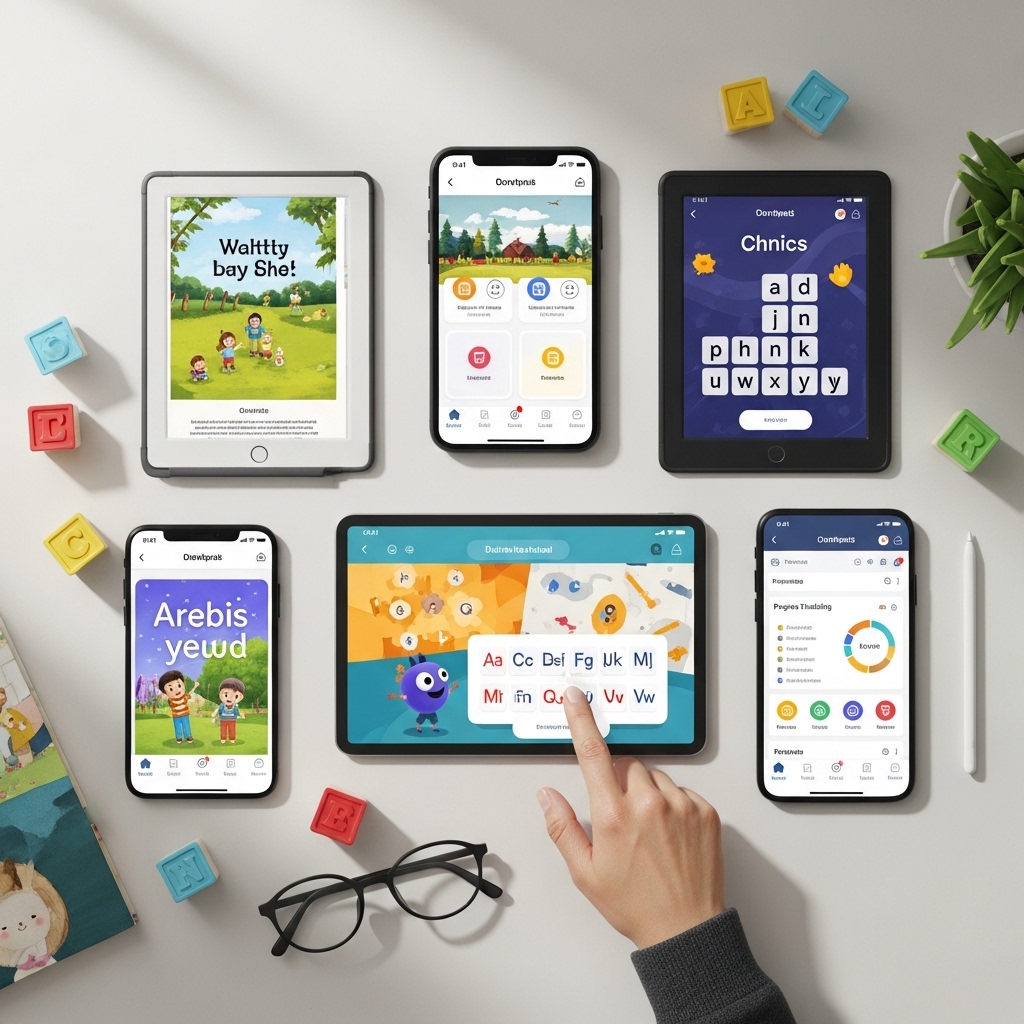
The landscape of early literacy instruction has been fundamentally transformed by thoughtfully designed applications that respect how children learn while leveraging technology’s unique advantages.
When integrated into comprehensive literacy programs that value diverse learning experiences, these apps become powerful tools for building confident, capable readers. They provide the practice and reinforcement essential for skill mastery while maintaining the engagement that keeps children motivated.
Success comes not from technology itself but from intentional use guided by educational principles and responsive to individual needs. Parents and educators who combine quality apps with rich literacy environments—filled with books, conversations, and writing opportunities—create optimal conditions for literacy development.
The journey toward reading proficiency looks different for every child, but literacy apps offer flexible, supportive resources that meet learners where they are and guide them forward. As these tools continue improving, they promise even greater potential for democratizing access to excellent early literacy instruction.
By choosing wisely, implementing strategically, and maintaining balance, families can harness the power of literacy apps to support children’s development into enthusiastic, skilled readers prepared for academic success and lifelong learning. 📚✨
