
Anúncios
Finding peace in our busy modern world can feel overwhelming, but Catholic meditation offers a gentle path to deepen your faith while nurturing your mental and emotional wellbeing.


As someone who has spent years supporting people through their health journeys, I’ve witnessed firsthand how spiritual practices transform lives. Catholic meditation isn’t about emptying your mind—it’s about filling your heart with God’s presence, allowing His peace to wash over you in the midst of daily chaos.
Anúncios
Many people confuse Catholic meditation with Eastern practices, but there’s a beautiful distinction. While we certainly respect all spiritual traditions, Catholic meditation centers on Scripture, sacred mysteries, and developing a personal relationship with Christ. It’s a practice rooted in centuries of tradition, yet perfectly suited for our contemporary lives.
🙏 Understanding the Heart of Catholic Meditation

Catholic meditation is essentially a form of mental prayer where we reflect deeply on God’s word, His works, and His presence in our lives. Unlike contemplation, which is a higher form of prayer where we simply rest in God’s presence, meditation actively engages our minds, hearts, and imagination.
Anúncios
The Catechism of the Catholic Church describes meditation as “a prayerful quest engaging thought, imagination, emotion, and desire.” It’s about creating space in your daily routine to truly encounter the Divine, not as a distant concept, but as a loving Father who desires intimacy with you.
Throughout Church history, saints and mystics have practiced and taught various forms of meditation. From St. Ignatius of Loyola’s imaginative contemplation to St. Teresa of Avila’s interior castle, these spiritual giants left us rich traditions to draw upon. Their experiences remind us that meditation isn’t reserved for monastics—it’s for everyone seeking deeper connection with God.
The Biblical Foundation for Meditative Prayer
Scripture itself encourages us to meditate. The Psalms repeatedly mention meditation: “I will meditate on your precepts and fix my eyes on your ways” (Psalm 119:15). Joshua was instructed to meditate on God’s law day and night. Mary, our Blessed Mother, “kept all these things, pondering them in her heart” (Luke 2:19)—a beautiful example of meditative reflection.
This biblical foundation assures us that taking time to quietly reflect on God’s mysteries isn’t selfish or wasteful—it’s essential for spiritual growth and aligns perfectly with our Catholic tradition.
✨ The Transformative Benefits for Body, Mind, and Soul
The benefits of Catholic meditation extend far beyond the spiritual realm, touching every aspect of our wellbeing. Let me share what research and centuries of practice have shown us:
Spiritually, regular meditation deepens your relationship with Christ. You’ll find yourself more attuned to the Holy Spirit’s gentle promptings throughout your day. Prayer becomes less of a duty and more of a conversation with a beloved friend. Many practitioners report experiencing profound peace, even during life’s storms.
Mentally and emotionally, meditation helps reduce anxiety and stress. When you focus on God’s word and promises, worries naturally diminish. You develop greater emotional regulation and resilience. The practice trains your mind to resist the constant distractions of modern life, improving focus and clarity.
Physically, the calming effects of meditation lower blood pressure, improve sleep quality, and boost immune function. The mind-body connection is real, and when we nurture our spiritual health, our physical health often follows. I’ve seen countless individuals experience relief from stress-related symptoms through consistent prayer practices.
How It Differs from Secular Mindfulness
While secular mindfulness focuses on present-moment awareness without specific content, Catholic meditation has a clear focus: encountering Christ. We’re not seeking emptiness but fullness—filling our minds with truth, beauty, and goodness found in Scripture and Church teaching.
This distinction matters because it gives our practice direction and purpose. We’re not just calming our nervous system (though that’s a wonderful side effect); we’re actively seeking transformation through grace.
🕊️ Simple Ways to Begin Your Practice Today
Starting a meditation practice doesn’t require hours of free time or a perfect prayer space. Begin where you are, with what you have. Here’s how to take those first meaningful steps:
Choose a consistent time and place. Morning often works beautifully—offering your first thoughts to God before the day’s demands crowd in. However, lunch breaks, evening hours, or even those quiet moments after children sleep can serve equally well. What matters most is consistency.
Create a simple sacred space. This might be a corner of your bedroom with a crucifix, Bible, and perhaps a candle. It doesn’t need to be elaborate—just a visual reminder that this space is set apart for encountering God.
Start small. Five minutes daily is infinitely better than thirty minutes once a month. As the practice becomes habitual, you’ll naturally want to extend your time. Remember, this isn’t about achievement—it’s about relationship.
Practical Steps for Beginners
- Begin with the Sign of the Cross, inviting the Holy Trinity into your time of prayer
- Take several deep breaths, consciously releasing tension and distractions
- Choose a short Scripture passage, perhaps just one or two verses
- Read the passage slowly, multiple times if needed
- Reflect on what words or phrases stand out to you
- Talk to God about what you’re experiencing—share your thoughts, feelings, questions
- Listen quietly for His response (which may come as gentle peace, insight, or simply His presence)
- Close with gratitude and the Sign of the Cross
Don’t worry if your mind wanders—this is completely normal! When you notice distraction, gently return your attention to God without frustration. Each time you redirect your focus is actually a small act of love, choosing Him again and again.
📖 Traditional Catholic Methods Worth Exploring
Our rich Catholic tradition offers numerous meditation methods, each with unique gifts to offer. Experiment with different approaches to discover what resonates with your heart.
Lectio Divina: Divine Reading
This ancient monastic practice involves four movements: lectio (reading), meditatio (meditation), oratio (prayer), and contemplatio (contemplation). You slowly read a Scripture passage, meditate on its meaning, respond in prayer, and rest in God’s presence.
Lectio Divina transforms Bible reading from information gathering into genuine encounter. Rather than analyzing Scripture academically, you allow the living Word to speak directly to your heart. This method works beautifully with the daily Mass readings, helping you prepare for or reflect upon the liturgy.
Ignatian Contemplation
St. Ignatius of Loyola taught a method using imagination to enter Gospel scenes. You place yourself within the story—perhaps as a bystander watching Jesus heal the blind man, or as a disciple in the boat during the storm. What do you see, hear, smell? What emotions arise? How does Jesus look at you?
This imaginative approach engages your whole being, making Scripture feel immediate and personal. It’s particularly powerful with Gospel narratives, allowing you to encounter Christ not as a historical figure but as a present reality.
The Rosary as Meditative Prayer
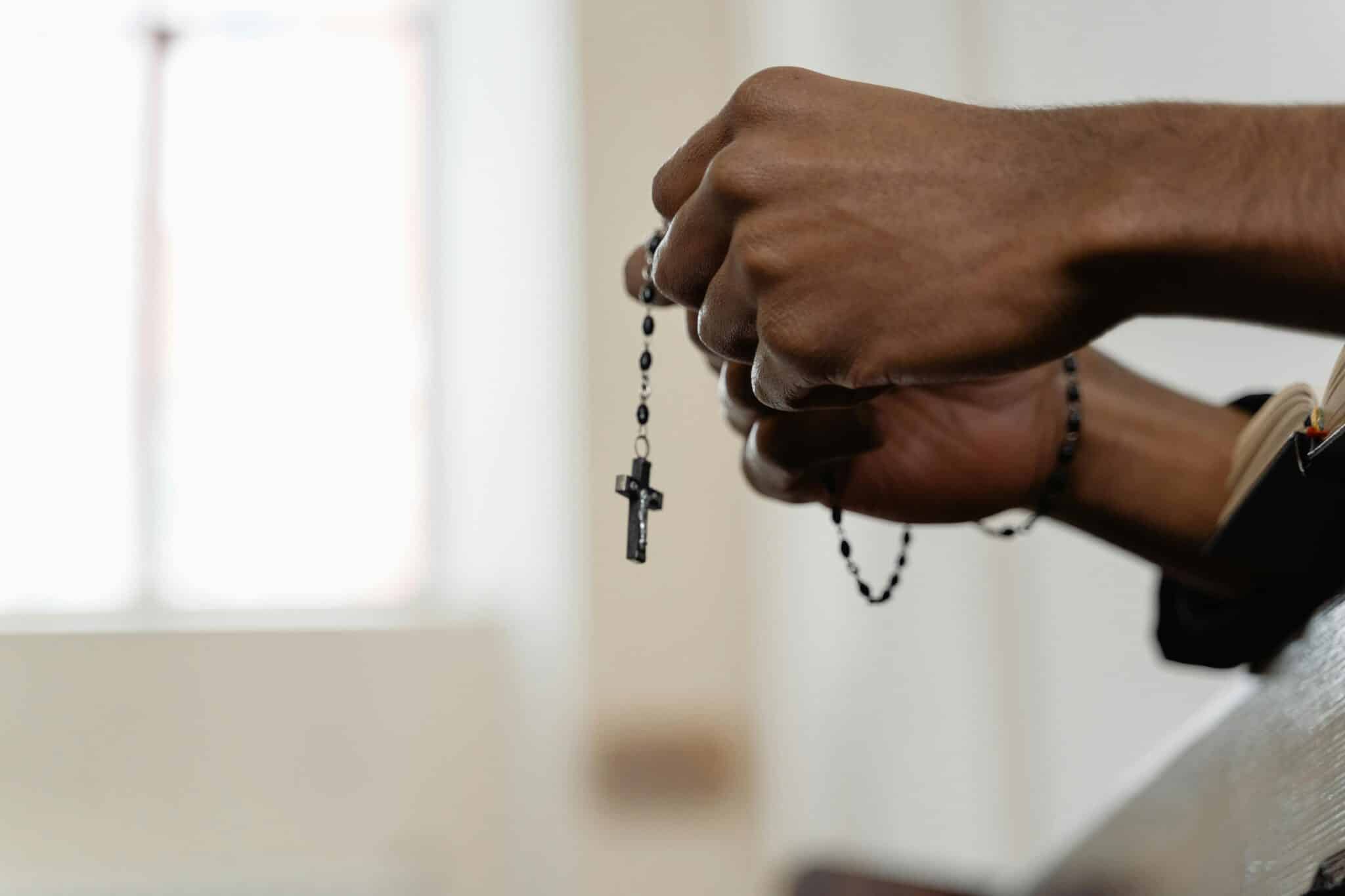
Many don’t realize the Rosary is actually a form of meditation. While your lips pray familiar words, your mind contemplates the mysteries of Christ’s life. The repetitive prayers create a gentle rhythm, quieting mental chatter and allowing deeper reflection on each mystery.
If you’ve struggled with the Rosary feeling mechanical, try truly meditating on each mystery. Picture the scene, consider Mary’s perspective, notice details you’ve overlooked before. The transformation can be profound.
Meditation on the Stations of the Cross
Walking the Stations during Lent is common, but this practice offers powerful meditation year-round. Slowly contemplating each station—Christ’s condemnation, His falls, His crucifixion—connects us to His suffering and love. We can bring our own crosses to each station, uniting them with His.
💚 Integrating Meditation into Your Daily Rhythm
The goal isn’t to add meditation as another task on your overwhelming to-do list. Instead, let it become a natural rhythm that actually simplifies and centers your day.
Consider these practical integration strategies that work for real people with busy lives:
Morning offering meditation: Before getting out of bed, take three minutes to offer your day to God. Visualize placing your upcoming activities, challenges, and relationships into His hands. This brief meditation sets a sacred tone for everything that follows.
Commute transformation: If you drive or take public transit, this time offers built-in meditation opportunity. Listen to Scripture audio, pray a decade of the Rosary, or simply practice awareness of God’s presence. Rush hour becomes prayer hour.
Mealtime mindfulness: Before meals, take an extra moment beyond standard grace. Reflect on God’s provision, the hands that prepared this food, the blessing of nourishment. Eating becomes eucharistic—giving thanks.
Bedtime examination: End your day with a brief meditation reviewing the past twenty-four hours. Where did you encounter God? Where did you miss Him? What are you grateful for? This practice, based on St. Ignatius’s Examen, brings peaceful closure to your day.
Creating Sustainable Habits
Habit research shows that linking new practices to existing routines increases success. Attach meditation to something you already do consistently—perhaps right after your morning coffee, or immediately following evening toothbrushing. This “habit stacking” makes meditation feel natural rather than forced.
Be patient with yourself. Some days meditation will feel rich and consoling; other days, dry and difficult. Both are normal and valuable. God works through consolation and desolation alike. Showing up consistently matters more than experiencing constant spiritual highs.
🌟 Overcoming Common Challenges with Compassion
Everyone encounters obstacles in their meditation practice. Understanding these challenges helps you navigate them with grace rather than giving up entirely.
“My Mind Won’t Stop Racing”
This is perhaps the most common complaint, and I want to offer you tremendous reassurance: a wandering mind doesn’t mean you’re failing. The human mind naturally produces thoughts—that’s what minds do! Meditation isn’t about achieving perfect mental stillness but about repeatedly, gently returning to God.
Try this perspective shift: each time you notice distraction and refocus on God, you’re performing a small act of love. Someone who redirects their attention fifty times during prayer is choosing God fifty times—that’s beautiful!
If intrusive thoughts persist, try keeping a small notepad nearby. Quickly jot down pressing concerns, then return to prayer. This acknowledges legitimate needs while preventing them from derailing your sacred time.
“I Don’t Feel Anything”
Our culture conditions us to equate value with feelings, but Catholic spirituality recognizes that consolation is a gift, not a requirement. The saints experienced long periods of spiritual dryness—St. Teresa of Calcutta famously struggled with God’s felt absence for decades while maintaining faithful prayer.
Your meditation holds value even when it feels empty. Faith means trusting God’s presence regardless of emotional confirmation. Often, the most spiritually fruitful periods occur during dryness, when we choose God without the reward of good feelings.
“I Don’t Have Time”
Time scarcity is real, especially if you’re caring for children, working demanding jobs, or managing health challenges. Yet we find time for what we truly prioritize. The question becomes: what might you trade for five minutes of peace with God?
Perhaps less social media scrolling? Five minutes less sleep (going to bed earlier)? Shorter showers? I’m not suggesting these flippantly—time really is limited. But often, honest examination reveals pockets of time we’re unconsciously wasting.
Also remember that brief, consistent practice outweighs lengthy, sporadic sessions. Five minutes daily builds a meditation habit; thirty minutes monthly does not.
🎯 Deepening Your Practice Over Time
As meditation becomes habitual, you’ll naturally desire deeper exploration. Here are ways to enrich your practice as you grow:
Find a spiritual director or guide. This person—ideally a priest, religious sister, or trained lay director—can offer personalized guidance, help you discern God’s movements, and encourage you during difficulties. Regular spiritual direction accelerates growth significantly.
Join a meditation or prayer group. Praying with others provides accountability, community, and the beautiful dynamic of collective prayer. Many parishes offer centering prayer groups, Bible studies incorporating Lectio Divina, or Rosary groups.
Attend a silent retreat. Even a day of silence and prayer can profoundly deepen your practice. Retreat centers offer guided programs at various price points, often with financial assistance available. The extended time allows you to move beyond surface distractions into genuine encounter.
Study the saints and mystics. Reading St. John of the Cross, St. Teresa of Avila, St. Thérèse of Lisieux, or contemporary writers like Thomas Merton provides wisdom from those who’ve walked this path deeply. Their insights illuminate your own journey.
Recognizing Spiritual Growth
Growth in meditation isn’t primarily about experiencing visions or extraordinary phenomena. Instead, watch for these subtle signs:
- Increased peace in daily circumstances
- Greater patience with yourself and others
- More spontaneous prayers throughout your day
- Deeper desire for Scripture and the sacraments
- Growing recognition of God’s presence in ordinary moments
- Enhanced ability to forgive and let go of resentment
- Simpler, more trusting approach to life’s challenges
These fruits indicate authentic spiritual maturation, even if your actual meditation time still feels imperfect.
💫 Resources to Support Your Journey
You don’t need to navigate this path alone. Abundant resources exist to support your Catholic meditation practice:
Several excellent Catholic meditation apps provide guided prayers, Scripture reflections, and daily inspiration. Hallow, for instance, offers specifically Catholic content including guided meditations, daily prayers, and music for contemplation.
Nenhum dado válido encontrado para as URLs fornecidas.
Books worth exploring include “Introduction to the Devout Life” by St. Francis de Sales, “The Practice of the Presence of God” by Brother Lawrence, and “Prayer Primer” by Thomas Dubay. These classics offer timeless wisdom in accessible language.
Online resources like the USCCB website provide daily Mass readings perfect for Lectio Divina. Many dioceses offer free podcasts featuring Scripture reflections and meditation guidance from local priests and teachers.
Your parish likely offers more than you realize—inquire about prayer groups, adult formation opportunities, or priests’ availability for spiritual direction. Building connections within your faith community enriches practice immeasurably.
🌈 Embracing the Journey with Hope
Beginning a Catholic meditation practice is truly an act of hope. You’re saying yes to God’s invitation for deeper intimacy, trusting that He desires this connection even more than you do.
Remember that this journey unfolds over a lifetime. Some seasons will feel rich and abundant; others, dry and challenging. Both have purpose. God meets us in consolation and desolation, in felt presence and mysterious absence. Your faithfulness through all seasons matters infinitely more than achieving perfect technique.
Please be gentle with yourself as you begin or deepen this practice. There’s no competition, no standard you must meet to qualify for God’s love. He delights in your smallest efforts, sees your sincere heart, and responds to your desire for Him with infinite tenderness.
Catholic meditation isn’t about becoming a different person—it’s about becoming more fully yourself, the person God created you to be. As you consistently bring your authentic self into His presence, allowing His word to shape your mind and His love to heal your heart, transformation naturally unfolds.
The beautiful truth is that God has been pursuing you long before you began pursuing Him through meditation. This practice simply opens your awareness to what has always been true: you are deeply loved, never alone, and invited into intimate friendship with the Creator of the universe.
Take that first step today. Set aside five minutes. Light a candle. Open Scripture. Breathe deeply and know that He is God. Your meditation practice begins not with perfection but with presence—yours offered to His. And in that sacred exchange, everything changes.
May your journey into Catholic meditation bring you peace that surpasses understanding, joy that doesn’t depend on circumstances, and love that transforms everything it touches. You’re not walking this path alone—the saints cheer you onward, the Church supports you, and most importantly, God Himself walks beside you, delighting in every step. 🙏✨
