Anúncios
Learning to crochet can be one of the most rewarding hobbies you’ll ever discover, offering both creative expression and therapeutic benefits for your well-being.


As someone who has witnessed countless individuals find comfort and purpose through creative activities during challenging times, I’m genuinely excited to guide you through this beautiful craft. Crochet isn’t just about making items—it’s about creating moments of peace, building confidence, and connecting with a tradition that has brought joy to generations.
Anúncios
Whether you’re looking for a new way to manage stress, seeking a mindful activity, or simply wanting to create handmade gifts for loved ones, crochet offers all of this and more. The rhythmic motion of the hook and yarn can be incredibly soothing, almost meditative, providing a gentle escape from daily worries.
Why Crochet is Wonderful for Your Well-Being 🧶

Before we dive into the practical aspects, let me share why crochet has become such a beloved activity for people of all ages and backgrounds. From a health perspective, the benefits are truly remarkable.
Anúncios
Research has shown that repetitive crafts like crochet can lower blood pressure, reduce stress hormones, and even ease symptoms of anxiety and depression. The concentration required engages your mind in a productive way, giving you a break from ruminating thoughts that might be troubling you.
For those dealing with chronic pain or recovering from illness, crochet provides a gentle form of hand therapy while creating something beautiful. It keeps your fingers nimble and your mind active, which is particularly beneficial as we age. I’ve seen patients light up when they complete their first project—that sense of accomplishment is priceless.
The social aspect shouldn’t be overlooked either. Crochet communities, both online and in person, offer wonderful opportunities for connection and friendship. There’s something special about sitting with others, sharing patterns, and encouraging each other’s progress.
Understanding What You’ll Need to Get Started 🎯
Let’s talk about the materials you’ll need. One of the beautiful things about crochet is that it doesn’t require a large investment to begin. You can start with just a hook and some yarn, making it accessible for almost everyone.
Choosing Your First Crochet Hook
Crochet hooks come in various sizes, materials, and styles. For beginners, I recommend starting with a medium-sized hook, typically labeled as H/8 (5mm) or I/9 (5.5mm). These sizes work well with medium-weight yarn and are comfortable to hold.
Hooks are made from different materials including aluminum, plastic, bamboo, and ergonomic varieties with cushioned grips. If you have arthritis or hand sensitivity, investing in an ergonomic hook from the start can make your experience much more comfortable. Your hands deserve that kindness.
Don’t worry about buying a complete set initially. One or two hooks in medium sizes will serve you well as you learn the basics. You can always expand your collection as you progress and discover which materials feel best in your hands.
Selecting Beginner-Friendly Yarn
Walking into a yarn store can feel overwhelming with the rainbow of colors and textures available. For your first projects, choose a medium-weight yarn (often labeled as #4 or “worsted weight”). This thickness is forgiving for beginners and lets you see your stitches clearly.
Light colors work better than dark ones when you’re learning because you can see each stitch more easily. Cream, light gray, or pastel shades are perfect choices. Avoid novelty yarns with fuzzy textures or multiple colors twisted together—save those for when you’re more confident.
Acrylic yarn is budget-friendly, washable, and perfect for practice. Cotton yarn is also wonderful and often feels nicer to work with, though it can be less forgiving of tension issues. Choose whatever feels comfortable to you and fits your budget.
Additional Helpful Tools
While not essential immediately, these items will become valuable as you progress:
- Yarn scissors or snips for cutting yarn cleanly
- Tapestry needles for weaving in ends and sewing pieces together
- Stitch markers to help you keep track of rounds and pattern repeats
- Measuring tape for checking gauge and project dimensions
- A small notebook to record patterns and notes about your projects
Learning to Hold Your Hook and Yarn Comfortably ✋
There’s no single “correct” way to hold your hook and yarn—what matters is finding what feels natural and comfortable for you. This is important to remember because many beginners worry they’re doing it wrong. Be patient and gentle with yourself during this learning phase.
Hook Holding Techniques
Most people use one of two methods: the “knife hold” (holding the hook like you’d hold a knife) or the “pencil hold” (holding it like a pencil). Try both and see which feels more natural. Your hand shouldn’t feel strained or cramped.
Your grip should be relaxed. Tension in your hands will translate to tension in your work and may cause discomfort. If you notice your hand getting tired, take a break. Crochet should never hurt.
Controlling Yarn Tension
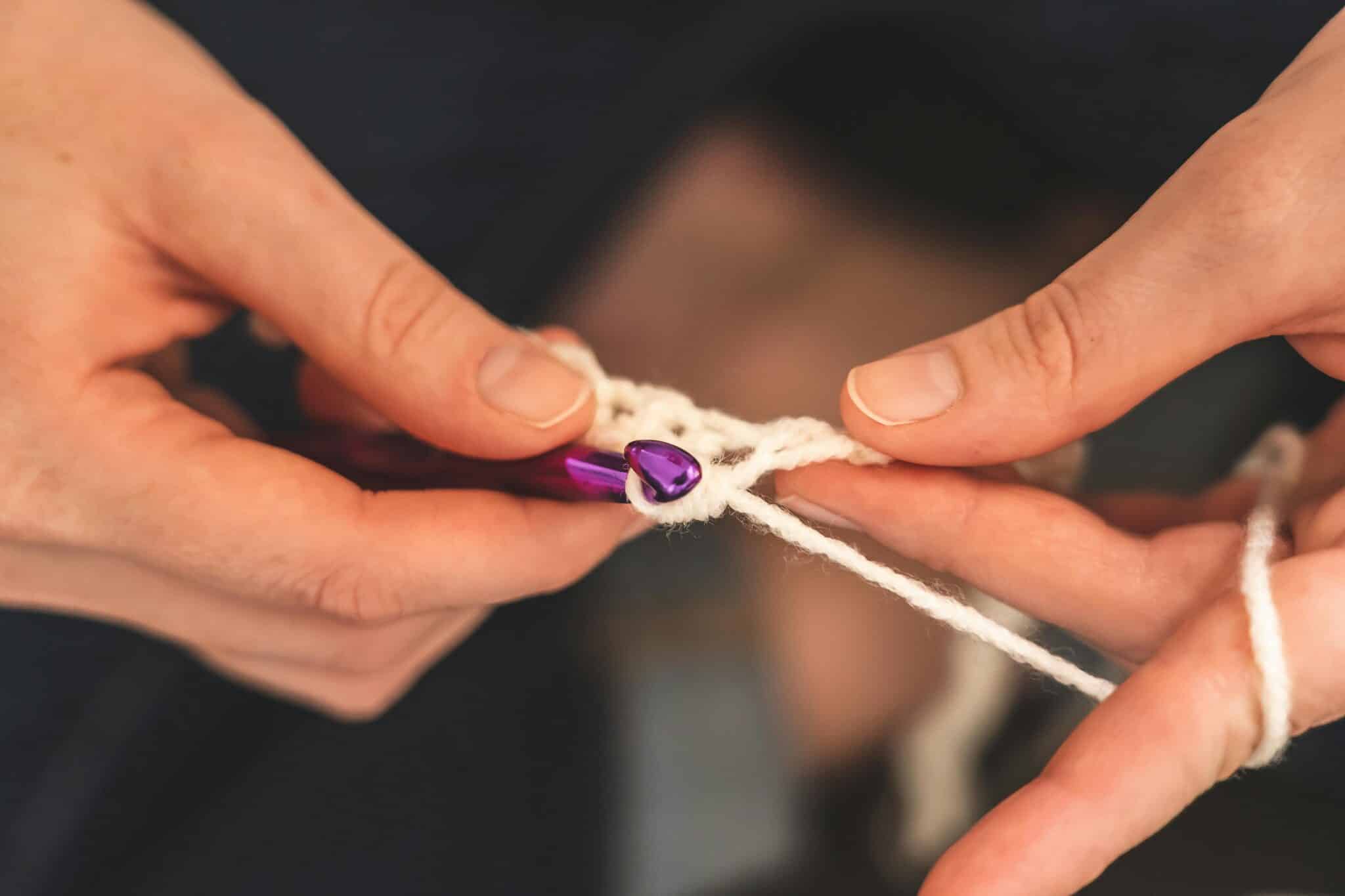
The yarn typically flows through your non-dominant hand. A common method is weaving the yarn over your index finger, under your middle finger, and over your ring finger. This creates natural tension as you work.
Again, everyone’s hands are different. Some people wrap the yarn around their pinky finger, others use fewer fingers. Experiment until you find a method that gives you consistent tension without straining your fingers.
Mastering Your First Essential Stitch: The Chain Stitch 🔗
Every crochet project begins with a foundation chain, making the chain stitch your first important skill to master. Don’t worry if your first attempts look uneven—this is completely normal and will improve with practice.
Start by making a slip knot on your hook. Create a loop with your yarn, pull the working yarn through that loop, and slide it onto your hook. Gently tighten it so it sits comfortably on your hook without being too tight.
To make a chain stitch, wrap the yarn over your hook from back to front (this is called a “yarn over”), then pull it through the loop already on your hook. Congratulations—you’ve made your first chain stitch! Continue this process: yarn over, pull through, yarn over, pull through.
Practice making chains until they become rhythmic and relatively even. This might take an hour, or it might take several days. Everyone learns at their own pace, and that’s perfectly okay. There’s no rush in this journey.
Building on Basics: The Single Crochet Stitch 🎨
Once you’re comfortable with chaining, the single crochet stitch becomes your foundation for countless projects. This versatile stitch creates a tight, sturdy fabric perfect for items like dishcloths, scarves, and blankets.
After making your foundation chain, you’ll work back across it. Skip the first chain (closest to your hook) and insert your hook into the second chain from the hook. You should see the chain has a front, back, and two loops on top—insert your hook under those top two loops.
Yarn over and pull through the chain. You now have two loops on your hook. Yarn over again and pull through both loops. That’s one single crochet stitch completed! Continue across your foundation chain, working one single crochet into each chain.
When you reach the end of the row, you’ll need to turn your work and create a turning chain before working back across. For single crochet, chain one and turn your work. This turning chain doesn’t count as a stitch.
Expanding Your Skills: Half Double and Double Crochet 📚
As you gain confidence with single crochet, you can explore taller stitches that work up more quickly and create different textures.
The Half Double Crochet
This stitch falls between single and double crochet in height. Yarn over before inserting your hook into the stitch, yarn over and pull through (three loops on hook), yarn over once more and pull through all three loops. It creates a lovely, slightly textured fabric.
The Double Crochet
This taller stitch is wonderful for larger projects. Yarn over before inserting your hook, yarn over and pull through (three loops on hook), yarn over and pull through two loops (two loops remain), yarn over and pull through the remaining two loops. Double crochet works up quickly and has a beautiful drape.
| Stitch Type | Height | Turning Chain | Best For |
|---|---|---|---|
| Single Crochet | Shortest | 1 chain | Tight, sturdy fabric |
| Half Double Crochet | Medium | 2 chains | Textured, medium-weight projects |
| Double Crochet | Tallest | 3 chains | Quick-working, drapey fabric |
Finding Support and Inspiration Through Apps and Online Resources 📱
Learning crochet has never been easier thanks to modern technology. While nothing replaces the hands-on help of an experienced friend or teacher, apps can provide invaluable support when you’re stuck on a technique or looking for pattern inspiration.
Several crochet apps offer step-by-step video tutorials, stitch dictionaries, and pattern libraries. These visual guides can be paused and rewatched as many times as needed, letting you learn at your own pace without feeling rushed or self-conscious.
Nenhum dado válido encontrado para as URLs fornecidas.
YouTube channels dedicated to crochet are also wonderful resources. Search for “beginner crochet tutorials” and you’ll find patient instructors demonstrating techniques from multiple angles. Don’t hesitate to watch several different teachers until you find someone whose teaching style resonates with you.
Choosing Your First Meaningful Project 🎁
The excitement of starting your first real project is wonderful, but choosing the right one is important for maintaining your motivation. I encourage you to select something that feels personally meaningful rather than simply starting with what’s “easiest.”
A simple dishcloth or washcloth makes an excellent first project. It’s small enough to complete relatively quickly, practical, and gives you focused practice with consistent stitches. These items also make thoughtful homemade gifts.
A basic scarf is another wonderful beginner project. Working in simple rows of single or double crochet, you can create something wearable while building muscle memory. Choose soft yarn in a color that brings you joy.
Avoid projects with complex shaping, multiple colors, or intricate stitch patterns initially. These will still be there waiting for you after you’ve built your foundational skills and confidence.
Troubleshooting Common Challenges with Compassion 💚
Every crocheter faces challenges, especially when beginning. I want you to know that struggling with certain aspects doesn’t mean you’re not “good” at crochet—it means you’re learning, which is exactly where you should be.
When Your Work Gets Narrower
If your rows are decreasing in width, you’re likely missing the last stitch of each row. This is incredibly common! Mark the first and last stitch of each row with a stitch marker until you train your eyes to spot them easily.
Managing Tension Issues
If your work feels too tight or too loose, experiment with your yarn-holding technique. Tight stitches often come from anxiety or concentration—remember to breathe and relax your shoulders. Loose stitches might mean you need to adjust how the yarn flows through your fingers.
Dealing with Frustration
There will be moments of frustration. You might need to undo rows of work, or a stitch won’t cooperate. This is normal and happens to experienced crocheters too. Take breaks when needed. Crochet should reduce stress, not create it.
Remember, every stitch you make is practice. Even the stitches you undo taught you something. Be as patient and kind with yourself as you would be with a dear friend learning something new.
Building a Sustainable Practice That Nurtures You 🌱
As you develop your crochet skills, think about how to make this hobby a regular part of your self-care routine. Even fifteen minutes of crochet can provide a meaningful mental break and sense of accomplishment.
Create a comfortable crochet space with good lighting to protect your eyes. Keep your current project and supplies in a basket or bag that’s easy to access. The lower the barrier to starting, the more likely you’ll pick up your hook regularly.
Consider joining a local crochet group or online community. Sharing your progress, seeing others’ work, and exchanging tips creates connection and encouragement. Many libraries and craft stores host free crochet circles—these can be wonderful for both learning and socializing.
Celebrating Progress Over Perfection ⭐
As someone who has supported countless individuals through health challenges and personal growth, I can tell you that the process matters far more than the product. Your first scarf might have uneven edges. Your dishcloth might be slightly wonky. These imperfections tell the story of your learning journey.
In our culture of social media perfection, it’s easy to compare your beginning to someone else’s years of experience. Please don’t fall into this trap. Every expert crocheter once struggled with tension, dropped stitches, and felt uncertain about their abilities.
Take photos of your progress. Save that first somewhat-lumpy dishcloth. In six months or a year, you’ll look back and marvel at how far you’ve come. These tangible markers of growth are precious reminders of your dedication and persistence.
Embracing the Creative Journey Ahead 🌈
As you continue practicing and growing in your crochet skills, new possibilities will unfold naturally. You might discover a love for making blankets, or perhaps amigurumi (small crocheted stuffed animals) will capture your heart. Some find joy in creating wearables, while others prefer home décor items.
The beauty of crochet is its versatility. It adapts to your interests, your schedule, and your needs. It can be meditative and repetitive, or challenging and intricate, depending on what you need in any given moment.
Allow yourself to explore without pressure. There’s no timeline for progress, no deadline for mastering certain skills. Crochet will be there for you whether you pick it up daily or weekly. It’s a forgiving, patient companion in creativity.
As you hold your hook and yarn, remember that you’re joining a global community of makers who have found comfort, joy, and purpose in this beautiful craft. You’re creating more than just items—you’re creating moments of peace, building resilience, and expressing care through every stitch.
Welcome to the wonderful world of crochet. I’m genuinely excited for the journey ahead of you, with all its learning curves, surprising successes, and the countless quiet moments of satisfaction that await. Take it one stitch at a time, be gentle with yourself, and most importantly, enjoy the process. You’ve got this! 🧶💕
