
Anúncios
Astrology has captivated humanity for thousands of years, offering insights into personality, relationships, and life paths through the study of celestial bodies and their influence on human affairs.


From ancient civilizations to modern times, people have looked to the stars for guidance and understanding. Whether you’re a curious beginner or someone deeply invested in spiritual practices, astrology provides a fascinating framework for self-discovery and cosmic connection.
Anúncios
This ancient system combines astronomy, mythology, and symbolism to create a complex map of potential energies and influences. Let’s explore the fundamental characteristics that make astrology such an enduring and meaningful practice across cultures worldwide. ✨
The Foundation: Understanding Astrological Principles
At its core, astrology operates on the principle that celestial bodies—including planets, the sun, and the moon—exert influence over terrestrial events and human characteristics. This belief system suggests a profound interconnection between the cosmos and individual lives.
Anúncios
The zodiac serves as astrology’s primary framework, dividing the ecliptic into twelve distinct sections. Each section corresponds to a constellation and represents specific archetypal energies, personality traits, and life themes that individuals born under that sign may embody.
The birth chart, or natal chart, acts as a cosmic snapshot of the sky at the exact moment of someone’s birth. This personalized map includes planetary positions, house placements, and aspects that astrologers interpret to understand an individual’s potential strengths, challenges, and life purpose.
The Twelve Zodiac Signs and Their Characteristics 🌟
Each zodiac sign carries unique qualities that influence how individuals express themselves, relate to others, and navigate life experiences. These signs are grouped into four elements—fire, earth, air, and water—each bringing distinct temperaments and approaches to existence.
Fire Signs: Aries, Leo, and Sagittarius
Fire signs radiate passion, enthusiasm, and dynamic energy. These individuals tend to be action-oriented, spontaneous, and driven by inspiration. Aries embodies pioneering courage, Leo channels creative self-expression, while Sagittarius seeks philosophical adventure and truth.
People with strong fire placements often display leadership qualities and infectious optimism. They thrive on challenges and prefer direct communication, though they may occasionally struggle with patience and impulsiveness.
Earth Signs: Taurus, Virgo, and Capricorn
Earth signs ground astrological energy with practicality, reliability, and material focus. Taurus brings sensual stability, Virgo offers analytical precision, and Capricorn provides ambitious discipline. These individuals excel at building tangible results and appreciate structure.
Their connection to the physical realm makes earth signs excellent at financial management, project completion, and creating lasting foundations. However, they may occasionally resist change or become overly focused on material concerns.
Air Signs: Gemini, Libra, and Aquarius
Air signs navigate life through intellect, communication, and social connection. Gemini expresses curiosity and versatility, Libra seeks harmony and partnership, while Aquarius innovates with humanitarian vision. These signs thrive on mental stimulation and idea exchange.
Air-dominant individuals excel at networking, problem-solving, and maintaining objectivity. Their ability to detach emotionally can be both a strength and a challenge in relationships requiring deeper vulnerability.
Water Signs: Cancer, Scorpio, and Pisces
Water signs embody emotional depth, intuition, and psychic sensitivity. Cancer nurtures with protective care, Scorpio transforms through intense experiences, and Pisces dissolves boundaries with compassionate imagination. These signs feel life rather than simply think about it.
Water placements gift individuals with empathy and creative insight but may also create challenges with emotional boundaries and overwhelming feelings. Learning to navigate their rich inner worlds becomes a lifelong journey.
Planetary Influences: The Cosmic Players 🪐
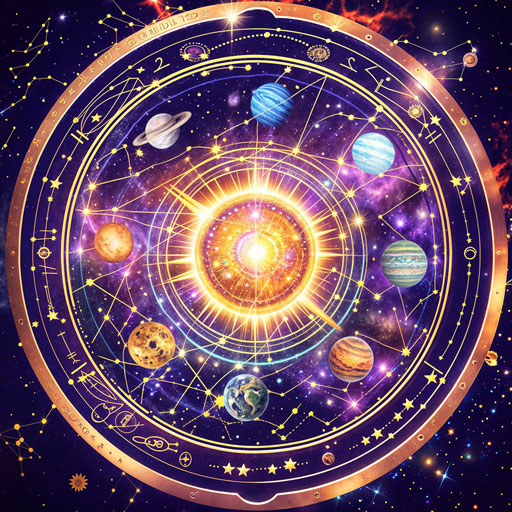
Beyond sun signs, astrology recognizes ten primary celestial bodies, each governing specific life areas and psychological functions. Understanding planetary influences reveals the complexity that makes each birth chart uniquely personal.
The Sun represents core identity, ego, and conscious purpose. It illuminates what brings us vitality and where we shine brightest. Meanwhile, the Moon governs emotional nature, subconscious patterns, and how we nurture ourselves and others.
Mercury rules communication, thought processes, and information exchange. Venus oversees love, beauty, values, and relational harmony. Mars drives action, desire, aggression, and how we assert ourselves in the world.
Jupiter expands whatever it touches, bringing growth, optimism, and philosophical understanding. Saturn contracts and structures, teaching discipline, responsibility, and the wisdom earned through limitations and time.
The outer planets—Uranus, Neptune, and Pluto—move slowly and influence entire generations. Uranus sparks revolution and innovation, Neptune dissolves boundaries through spirituality and imagination, while Pluto transforms through deep psychological processes and power dynamics.
The Twelve Houses: Life’s Different Stages
The astrological houses divide the birth chart into twelve sectors, each representing specific life areas. These houses contextualize where planetary energies manifest most prominently in an individual’s experience.
The first house, or Ascendant, governs self-image, physical appearance, and first impressions. The second house relates to personal resources, values, and material security. The third house oversees communication, siblings, and local environment.
Fourth house concerns home, family roots, and emotional foundation. The fifth house rules creativity, romance, and self-expression. Sixth house addresses health, daily routines, and service to others.
The seventh house governs partnerships, marriage, and one-on-one relationships. Eighth house delves into transformation, shared resources, and intimacy. Ninth house expands through higher education, travel, and philosophical beliefs.
Tenth house represents career, public reputation, and life direction. The eleventh house connects to friendships, groups, and collective aspirations. Finally, the twelfth house encompasses spirituality, hidden matters, and subconscious patterns.
Aspects: The Geometric Conversations Between Planets 🔮
Aspects describe the angular relationships between planets in a birth chart. These geometric patterns reveal how different planetary energies interact, creating harmony, tension, or dynamic motivation within an individual’s psychological makeup.
Conjunctions occur when planets occupy the same zodiac degree, blending their energies inseparably. Sextiles create opportunities through 60-degree angles, while squares generate productive tension at 90 degrees, pushing growth through challenge.
Trines flow harmoniously at 120-degree angles, often indicating natural talents or easy expression. Oppositions at 180 degrees create awareness through polarization, requiring integration of seemingly contradictory energies.
Understanding aspects adds dimensional depth to chart interpretation. A challenging aspect isn’t necessarily negative—it often provides the friction necessary for development and achievement.
Different Astrological Systems and Traditions
While Western astrology dominates popular culture, several distinct astrological traditions offer alternative perspectives on celestial influence. Each system developed within specific cultural contexts, reflecting diverse philosophical frameworks.
Vedic astrology, or Jyotish, originated in ancient India and uses the sidereal zodiac, which accounts for precession of the equinoxes. This system emphasizes karmic patterns, predictive techniques, and spiritual evolution through planetary periods called dashas.
Chinese astrology operates on a twelve-year cycle, with each year governed by an animal sign combined with five elemental influences. This tradition integrates philosophy from Taoism and considers not just birth year but also month, day, and hour.
Mayan astrology developed sophisticated astronomical observations, creating a complex calendar system. This tradition connects individuals to cosmic energies through day signs and tones that reveal life purpose and spiritual gifts.
The Role of Astrology in Modern Life 💫
Contemporary astrology has experienced remarkable resurgence, particularly among millennials and younger generations seeking meaning beyond materialistic paradigms. Social media platforms have democratized astrological knowledge, making it accessible to wider audiences than ever before.
Many people use astrology as a tool for self-reflection and personal development. Rather than viewing it as deterministic fate, modern practitioners emphasize free will and conscious choice within cosmic patterns. The birth chart becomes a map of potential, not a rigid prescription.
Relationship astrology, or synastry, helps people understand compatibility and relational dynamics. By comparing birth charts, individuals gain insight into attraction patterns, communication styles, and areas requiring compromise or awareness.
Electional astrology assists in timing important events—launching businesses, scheduling weddings, or making significant decisions. This branch selects auspicious moments when planetary configurations support desired outcomes.
Scientific Perspectives and Criticisms
Mainstream science generally dismisses astrology due to lack of empirical evidence supporting causal mechanisms between celestial bodies and human personality or events. Critics point to cognitive biases like the Barnum effect, where people recognize vague descriptions as personally meaningful.
However, astrology’s value may lie not in literal causation but in its symbolic language and psychological framework. Carl Jung appreciated astrology as a sophisticated system of archetypal psychology, useful for exploring the human psyche regardless of astronomical validation.
Many practitioners view astrology as an interpretive art rather than predictive science. Its worth emerges through meaningful reflection, pattern recognition, and the therapeutic relationship between consultant and client.
Practical Applications: Getting Started with Astrology
Beginning an astrological journey requires curiosity and openness rather than blind belief. Start by calculating your complete birth chart, which needs accurate birth time, date, and location. Numerous websites and applications offer free chart generation.
Study your Sun, Moon, and Rising signs first, as these form the personality core. The Sun reveals conscious identity, the Moon uncovers emotional nature, and the Rising sign shows how you interface with the world.
Explore which planets occupy which houses in your chart. Notice patterns—are most planets in one element or hemisphere? These distributions reveal psychological emphases and life focus areas.
Track current planetary transits and how they aspect your natal planets. This practice develops awareness of cosmic timing and potential themes emerging in your life. Keep a journal noting correlations between transits and experiences.
The Ethical Practice of Astrology 🌙
Responsible astrologers emphasize empowerment over prediction, avoiding fatalistic interpretations that remove personal agency. Ethical practice respects client autonomy, maintains confidentiality, and recognizes the limits of astrological insight.
Astrology should complement, not replace, professional mental health services, medical advice, or legal counsel. While it offers valuable perspective, practitioners must acknowledge when issues require specialized professional intervention.
Cultural sensitivity matters when interpreting charts for diverse clients. Astrological archetypes manifest differently across cultural contexts, and interpretations should honor individual backgrounds and lived experiences.
Astrology as a Lifelong Journey
Studying astrology reveals endless depth—there’s always more to learn, integrate, and understand. The birth chart unfolds new meanings as individuals mature, and planetary transits bring different lessons at various life stages.
This ancient wisdom tradition connects us to something larger than individual existence. It reminds us that we’re part of cosmic rhythms, seasonal cycles, and universal patterns that have guided humanity throughout history.
Whether approached as spiritual practice, psychological tool, or creative framework, astrology offers rich symbolic language for navigating life’s mysteries. It invites reflection on purpose, relationships, and the eternal question of who we are beneath surface identities.
The stars don’t compel—they incline. Astrology provides a mirror for self-discovery, revealing potentials waiting to be consciously developed. In understanding celestial patterns, we gain perspective on our earthly journey and the unique contribution each soul brings to the collective human experience. ✨
